


Two numbers capture how far this market has come: in June 2025, Blue Origin’s NS-33 flight carried the 750th human ever to reach space, and Virgin Galactic now lists suborbital seats at $600,000 apiece for its next-generation vehicles.
Space tourism isn’t just a thrill ride; founders pitch it as infrastructure for the future.
“It’s this generation’s job to build a road to space, so that future generations can unleash their creativity.”
— Jeff Bezos, Founder, Blue Origin
Key stats: Space Tourism
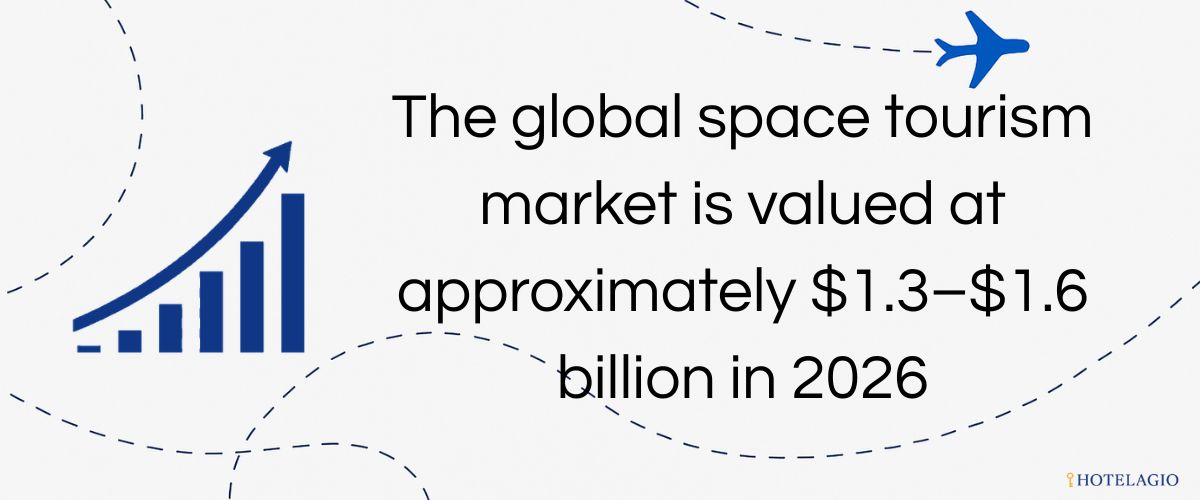
- The space tourism market is already worth over USD 1.5 billion (2025) and may nearly triple by 2032.
- Some forecasts estimate annual growth rates of 15–17% over the next decade.
- As of 2024, only ~63 individuals have flown as space tourists.
- Meanwhile, more than 280 people from 26 countries have visited the International Space Station (including both professional and private).
- Suborbital flights are currently dominant in space tourism, while orbital flights remain rare and very expensive.
- Many people are betting on the future: 800+ have reserved tickets for future spaceflights.
- In 2025, 250–400 people might travel into space if projections hold.
- Some upcoming flights are expected to cost around USD 600,000 per seat in new spaceplane models (e.g. Virgin Galactic’s future plans).
- In 2025, Blue Origin’s NS-34 mission carried 6 people on a suborbital flight—one of the current examples of private space travel.
What actually counts as “space”—50 miles or 100 km?
There are two common boundaries. The Fédération Aéronautique Internationale (FAI) uses the Kármán line at 100 km (62 miles).
In the U.S., the FAA recognizes 50 statute miles (80.5 km) for commercial astronaut recognition. Most Blue Origin flights cross 100 km; Virgin Galactic flights exceed 50 miles but are typically below 100 km.
How many people have gone to space—and how many via tourism?
By June 29, 2025, Blue Origin’s NS-33 carried its 70th Blue Origin astronaut and marked the 750th person in history to reach space (per the Association of Space Explorers’ registry).
Blue Origin’s previous NS-32 flight in May brought the company’s cumulative passenger total to 64 since 2021.
Virgin Galactic completed 12 crewed suborbital flights through June 2024 before pausing to build its Delta-class vehicles.
Who is flying paying passengers right now?
- Blue Origin (New Shepard): short, suborbital hops; seventh human flight resumed in 2024 (NS-25) after a hiatus; multiple crewed flights in 2025.
- Virgin Galactic (VSS Unity / Delta-class): suborbital—Unity retired mid-2024; Delta service targeted for 2026.
- SpaceX (Crew Dragon): orbital private missions—Inspiration4 (2021), Polaris Dawn (2024, first commercial spacewalk), and Axiom missions to the ISS (Ax-1 in 2022, Ax-2 in 2023, Ax-3 in 2024, Ax-4 in 2025).
NASA frames private missions as a new chapter built on agency–industry partnerships.
“NASA’s partnership with industry through the commercial cargo and crew programs has led our nation to this new era in human spaceflight.”
— Bill Nelson, Administrator, NASA
How high do you go—and for how long?
| Provider | Flight type | Typical peak altitude | Time aloft / in microgravity | Notes |
|---|---|---|---|---|
| Blue Origin – New Shepard | Suborbital | >100 km (crosses Kármán line) | ~10–12 minutes total; several minutes weightless | Fully autonomous capsule. |
| Virgin Galactic – VSS Unity | Suborbital | ~54–87 km (e.g., 54.4 miles on Galactic-07) | ~3–4 minutes microgravity | Flights exceeded 50 miles; Unity retired in 2024. |
| SpaceX – Crew Dragon (Polaris Dawn) | Orbital | Up to ~1,200 km apogee | Multi-day (≈5 days) | First commercial spacewalk in Sept. 2024. |
How much does space tourism cost in 2025?
| Experience | Seat price (public) | Status / timing |
|---|---|---|
| Virgin Galactic (Delta-class) | $600,000 per person; $150,000 initial payment (includes $50k membership fee) | Unity paused; private astronaut flights targeted for 2026. |
| Blue Origin (New Shepard) | Not publicly disclosed | Crewed flights ongoing; multiple missions in 2025. |
| Space Perspective (stratospheric balloon – near-space) | $125,000 per seat (not “space” by FAI/FAA definition) | Targeting human flights/testing; commercial ops planned post-testing. |
| World View (stratospheric balloon – near-space) | $50,000 per seat (not “space”) | Tourism offering under development. |
Note: Balloon experiences reach the stratosphere (~30–35 km)—spectacular views, but below the 50-mile/100-km “space” thresholds.
What are the most important 2024–2025 milestones?
- First commercial spacewalk: SpaceX’s Polaris Dawn crew performed the world’s first commercial EVA on Sept. 12, 2024.
- Blue Origin’s all-female flight (NS-31): Six women—led by Lauren Sánchez—flew suborbitally in April 2025.
- Virgin Galactic pauses Unity, pivots to Delta-class: Unity’s 12th and final commercial mission (Galactic-07) flew June 8, 2024; Delta service is planned to begin in 2026.
- FAA activity at record levels: 148 FAA-licensed space operations in FY2024; the FAA marked its 1,000th licensed or permitted commercial space operation on Aug. 14, 2025.
Europe sees private missions as a lever to expand its footprint in human spaceflight.
“Our collaboration with Axiom Space represents a step forward in Europe’s endeavors in space.”
— Josef Aschbacher, Director General, European Space Agency
How big is the regulatory footprint?
Commercial human spaceflight in the U.S. is overseen by the FAA Office of Commercial Space Transportation (AST).
Activity is surging: 148 licensed operations in FY2024, and 1,000 total operations licensed or permitted since 1989 as of August 2025—underscoring rapid growth but also the need for evolving rules (e.g., updates to Part 450 licensing).
Regulators emphasize that growing cadence must be matched by safety oversight.
“I… reiterate the importance of the work we do at the FAA to enable safe space transportation.”
— Kelvin B. Coleman, Assoc. Administrator, FAA Commercial Space Transportation
What does demand look like for suborbital seats?
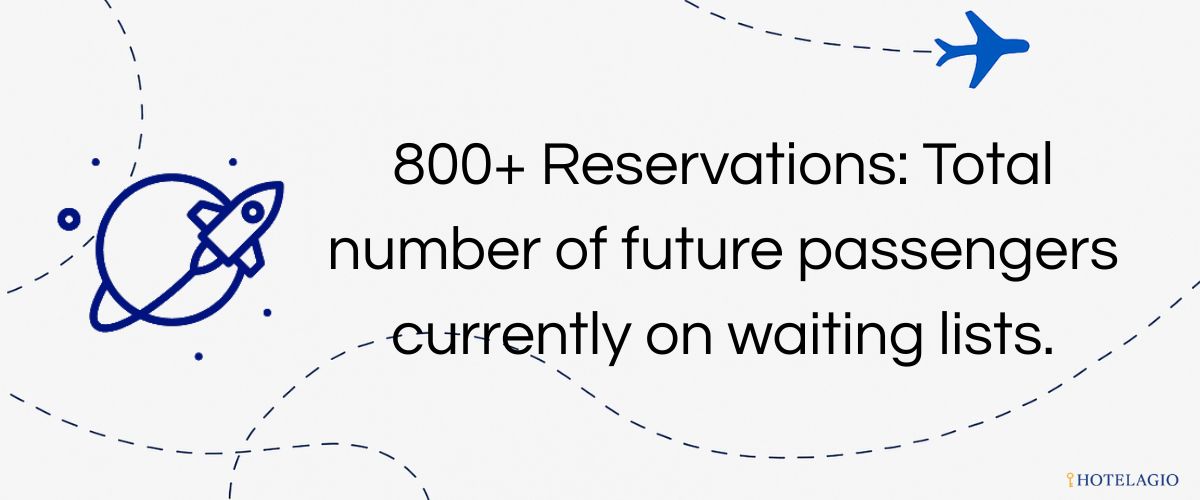
Virgin Galactic reports ~700–750 reservations across recent filings and updates, with pricing set at $600,000 and expected to rise for Delta-class flights.
Blue Origin does not publish seat pricing or reservation counts, but the company has now flown dozens of private astronauts since 2021, with 70 by mid-2025 and more flights planned.
Quick table: Who’s doing what in space tourism?
| Company | Vehicle | Flight type | Current status (2025) |
|---|---|---|---|
| Blue Origin | New Shepard | Suborbital | Multiple crewed flights in 2025; 70 people flown by June 2025; 10–12 min trip above 100 km. |
| Virgin Galactic | Delta-class (in dev.) | Suborbital | Unity retired June 2024; Delta flights target 2026; seats $600k. |
| SpaceX | Crew Dragon | Orbital | Private missions include Inspiration4, Polaris Dawn (first commercial EVA), and Axiom missions to the ISS. |
FAQ
Is suborbital space tourism “real space”?
Yes—Blue Origin crosses 100 km (FAI’s boundary). Virgin Galactic flights exceed 50 miles (FAA’s threshold) but typically remain below 100 km.
How long will I be weightless?
Suborbital flyers typically get several minutes of microgravity; Blue Origin advertises several minutes within an ~11-minute flight. Orbital trips (e.g., SpaceX) last days.
What’s the safest option?
All providers operate under FAA oversight; each has unique risks. Blue Origin and Virgin Galactic have completed multiple tourist flights; SpaceX has completed several private orbital missions. Review each company’s safety materials and consider medical fitness requirements.
Can I book a seat today?
You can place a deposit with Virgin Galactic ($150,000 toward a $600,000 seat) for Delta-class flights targeting 2026. Blue Origin solicits interest but does not publish seat prices.
What was the biggest milestone recently?
SpaceX’s Polaris Dawn completed the first commercial spacewalk in 2024, demonstrating private-sector EVA capability.
Conclusion
Space tourism is no longer theoretical: Blue Origin is flying frequent suborbital missions, Virgin Galactic is retooling for higher-capacity flights, and SpaceX is proving what private orbital crews can do—including the first commercial spacewalk.
Prices are still sky-high, but the cadence of flights, the number of people reaching space, and the regulatory milestones all point to a market that’s maturing fast.
Sources
- Blue Origin — “Blue Origin Completes 25th Mission to Space with Six Crew Onboard”
- Blue Origin — “New Shepard Mission NS-31”
- Space.com — “Blue Origin completes its 12th human spaceflight (NS-32)”
- Space.com — “Blue Origin NS-33 launches 6 tourists, including the 750th person ever to fly into space”
- Virgin Galactic — “Future Astronaut Product Information”
- Virgin Galactic Investor News — “Virgin Galactic Completes 12th Successful Spaceflight (Galactic-07)”
- Space.com — “Virgin Galactic on track to start launching customers again in 2026”
- Polaris Program — “Polaris Dawn” (mission highlights)
- Space.com — “Polaris Dawn completes the first commercial spacewalk”
- FAA — “New Record for FAA-Licensed Commercial Space Operations (FY2024)”
- FAA — “Commercial Space Transportation: FAA Reaches 1,000 Licensed Space Operations”
- FAI (NAA) — “FAI Sporting Code — Astronautics (100 km boundary)”
- FAA — “FAA Commercial Human Space Flight Recognition (50-mile criterion)”
- Inspiration4 — “Inspiration4: world’s first all-civilian mission to orbit”
- NASA — “Axiom Mission 4 operations update (2025)”
- Space Perspective — “Reserve Your Space Flight Ticket ($125,000)”
- Space Perspective — “Development flight update (2024)”
- World View — “World View to charge $50,000 for stratospheric flights”

0 Comment