


Eco-tourism is not niche. Protected areas receive ~8 billion visits per year; global coverage today stands near 17.5% of land and 8.45% of marine areas.
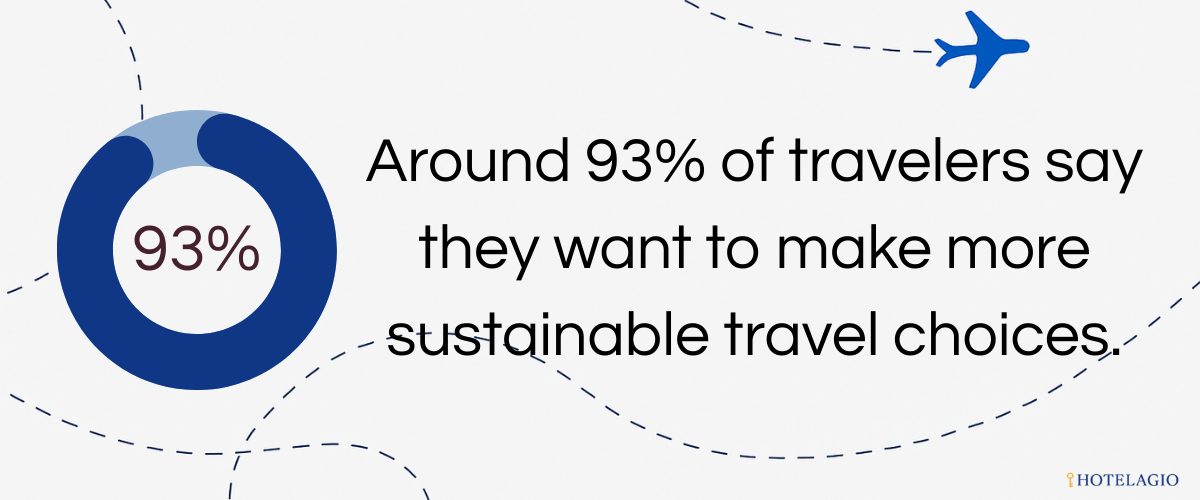
Travelers are shifting behavior: 93% say they want to make more sustainable choices, and a slim majority now actively consider community impact.
Tourism’s climate footprint sits between 6.5% and ~8% of global emissions depending on scope and method. Treat the signal, not the noise.
Key stats: Ecotourism
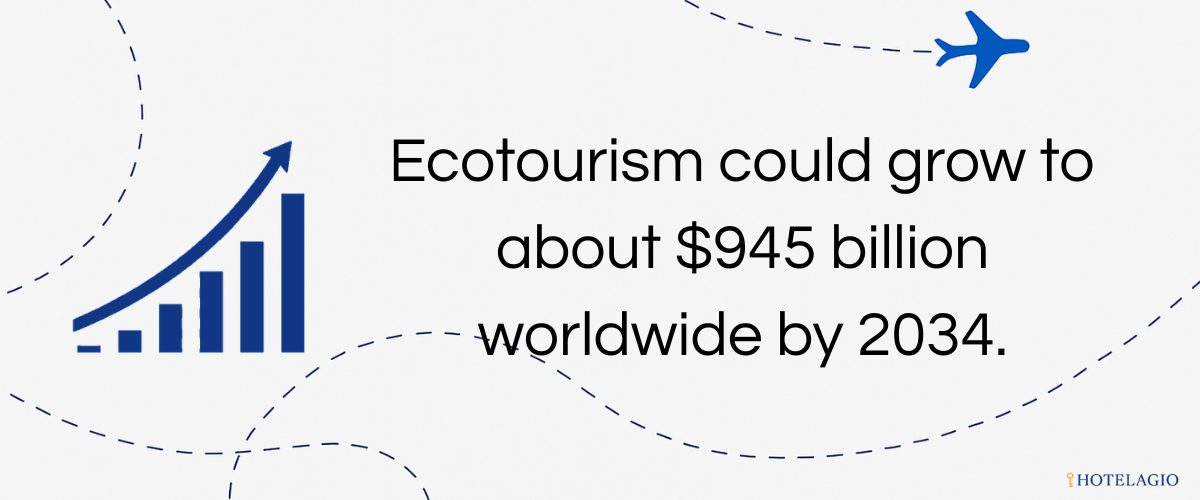
- The global ecotourism market is huge—around USD 248 billion in 2024—and is projected to nearly quadruple to USD 945 billion by 2034.
- In one forecast, it’s expected to grow ~12.6% between 2024 and 2025 alone.
- Nature-based tourism sends ~8 billion visits annually to protected areas worldwide (covering 17% of lands, 8% of marine zones).
- Over half of ecotourism revenues come from land-based activities (hiking, wildlife, eco-treks).
- Group eco-tourism remains a dominant segment, though solo eco-travelers are growing rapidly.
- Regions on the rise: Asia-Pacific ~23% share; Europe ~38% share; North America holds a considerable slice of revenues.
- Beyond income, ecotourism is seen as a mechanism for conservation, local community benefit, and sustainable livelihoods.
- But it’s not risk-free: increased tourism can pose biodiversity threats, making certifications, responsible management, and green policies essential.
- Corporate eco-investments and certifications can have strong positive spillover in tourism demand—sometimes more than public policies.
- Global protection today: 17.54% land/inland waters; 8.45% marine (Mar 2025 update).
- Traveler mindset 2025: 93% want to make more sustainable choices; 53% consciously consider community impact.
- Tourism emissions share: 6.5% of global GHG in 2023 (WTTC); historical full-supply-chain estimate ~8%.
- Nature-based tourism multiplier: each tourist dollar can drive $2–$5 in local household income.
- Sector scale 2025: Travel & Tourism projected 10.3% of global GDP and 371M jobs (context; not eco-tourism-only).
How big is the eco-tourism market?
Market sizing varies by definition. Use ranges, not single-point certainty.
Comparative market estimates (global)
| Source | Latest base | Forecast horizon | Forecast | CAGR |
|---|---|---|---|---|
| IMARC | $219.8B (2024) | to 2033 | $648.7B | 11.4% |
| Fortune Business Insights | $295.8B (2025) | to 2032 | $814.4B | 15.6% |
| Grand View Research | $185.9B (2021) | to 2030 | $665.2B | 15.2% |
Methodologies differ (segments included, price bases, supply chain coverage). Treat these as directional.
Where does eco-tourism actually happen?
In protected and conserved areas. Coverage is rising slowly; quality and management lag.
- Coverage status (Mar 2025): 17.54% land/inland waters; 8.45% marine. Track progress monthly via Protected Planet.
- Volume: ~8B visits per year to protected areas; large, recurring demand.
- Economic signal: protected-area tourism regularly out-earns public management budgets by orders of magnitude. Multipliers $2–$5 per tourist dollar are common in local economies.
What do travelers say—and do?
- Intent vs. action: In 2025, 93% report wanting to choose more sustainable options; in 2024, 45% said sustainability was important but not their primary booking filter. Expect intent-action gaps; design accordingly.
- Community lens: 53% now consciously weigh local community impact, not just environment.
- Certification momentum: GSTC launched a global directory for GSTC-certified hotels in 2025; major brands and DMOs align to GSTC criteria. Signal: verification over slogans.
“True sustainability in tourism requires more than good intentions; it demands shared values, informed choices, and a collective vision.”
— Luigi Cabrini, Chair, Global Sustainable Tourism Council.
What is the climate footprint of eco-tourism?
Two frames exist:
- Sector accounting (WTTC ESR): 6.5% of global emissions in 2023, down from 7.8% in 2019—economic growth outpacing footprint growth.
- Full supply-chain models (peer-reviewed): tourism near ~8% of global GHG (illustrated for 2013); decoupling is limited.
“We’re decoupling growth from emissions—Travel & Tourism is expanding economically while lowering its environmental footprint.”
— Julia Simpson, President & CEO, WTTC.
Does eco-tourism move money locally?
Yes. Nature-based tourism multiplies spend in rural economies and can finance conservation when structured correctly.
- Income multipliers: $2–$5 per tourist dollar is typical in local households near protected areas.
- Macro context: Travel & Tourism projected 371M jobs and 10.3% of global GDP in 2025—eco-tourism is a growth lever inside that system.
“Nature-based tourism is a triple win: it protects biodiversity, creates meaningful jobs, and generates strong economic returns.”
— Juergen Voegele, Vice President for the Planet, World Bank.
Eco-tourism indicators (latest)
| Indicator | Latest reading |
|---|---|
| Protected-area visits | ~8B/year |
| Protected coverage | 17.54% land; 8.45% marine (Mar 2025) |
| Traveler intent (sustainable) | 93% want to choose more sustainable options (2025) |
| Community-impact awareness | 53% mindful of tourism’s local impact (2025) |
| Tourism emissions share | 6.5% (2023); historical ~8% |
| Market size (range) | $220–296B base; $665–814B by 2030–2033 |
FAQ
How big is eco-tourism in dollars?
Between $220–296B today depending on definition; multiple forecasts place the market between $665–814B within a decade. Use ranges.
How much nature is protected now?
About 17.5% of land and 8.45% of marine areas are documented as protected or conserved (Mar 2025).
Do most travelers actually care?
Signal is up: 93% report wanting more sustainable choices; 53% actively consider community impact. Expect friction at purchase; simplify options.
Is eco-tourism low-carbon by default?
No. Tourism’s footprint is 6.5%–~8% of global emissions depending on scope. Cuts require route design, rail/coach shifts, efficient lodging, and food-waste control.
Sources
- World Bank — Nature-Based Tourism
- UNEP-WCMC / Protected Planet — Protected Planet Report 2024
- Protected Planet — Discover the world’s protected and conserved areas
- Booking.com Newsroom — Booking.com’s 2025 Research Reveals Growing Traveler Awareness of Tourism Impact on Communities
- WTTC — Environmental & Social Research: Travel & Tourism’s Environmental Footprint
- WTTC (News) — WTTC Reveals Significant Decrease in Travel & Tourism’s Climate Footprint Emissions
- Nature Climate Change — The carbon footprint of global tourism
- World Bank (Press Release) — World Bank Report: Investing in Protected Areas Reaps Big Rewards
- IMARC Group — Ecotourism Market Size, Trends, Growth & Forecast to 2033
- Fortune Business Insights — Ecotourism Market Size, Share, Growth
- Grand View Research — Ecotourism Market Size, Share & Growth, Global Report, 2030

0 Comment