


The American tourism industry is rebounding — and transforming.
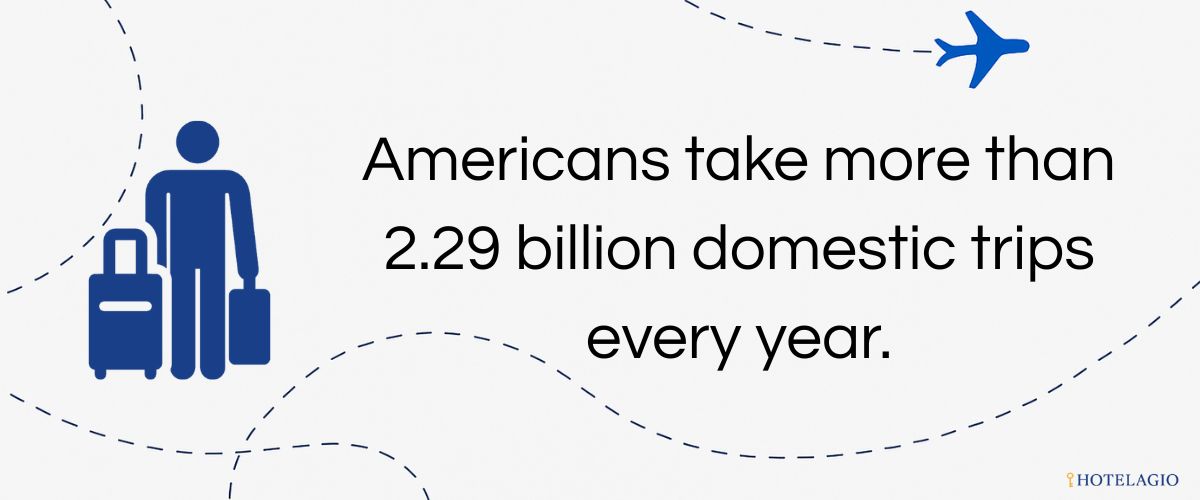
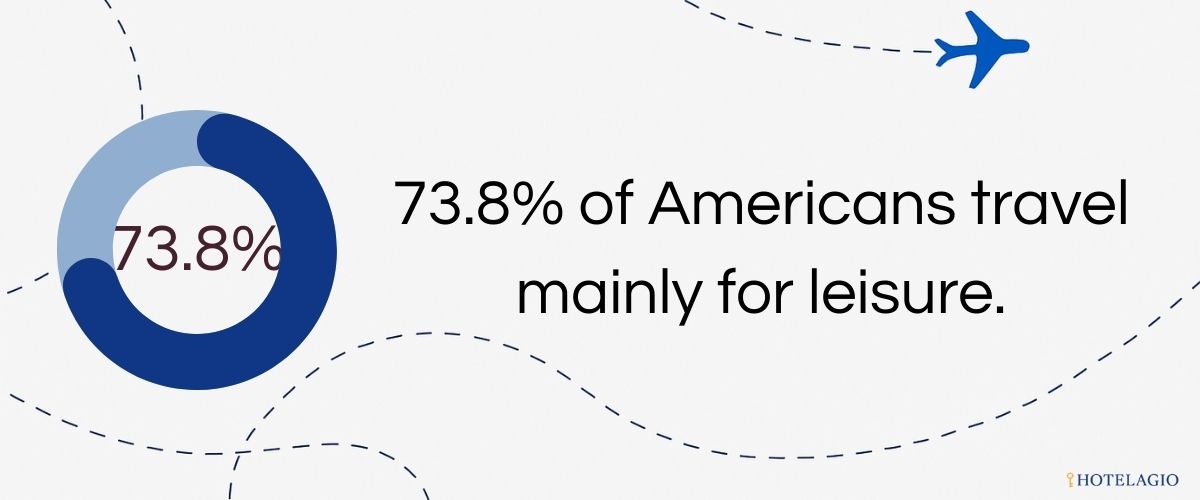
Over 2.29 billion domestic trips are now taken annually, and 73.8% of Americans say they travel primarily for pleasure. These numbers underscore just how vital travel has become — not only to the economy, but to daily life.
After pandemic-era disruptions and economic headwinds, travel patterns across the United States are shifting. From explosive growth in domestic tourism to rising eco-conscious habits and long-term booking trends, the latest statistics reveal how Americans travel — and where the industry is headed next.
Top US Tourism Statistics – Editor’s Picks
- US international travel spending is projected to drop by $12.5 billion in 2025.
- Over 2.29 billion domestic trips are taken by Americans annually.
- 73.8% of Americans travel for pleasure.
- Canadian visits to the US fell 31.9% via land and 13.5% via air in March 2025.
- Online travel agencies account for 44.2% of all bookings.
- Long-term stays on Airbnb increased by 10.3% year-over-year.
- Orlando saw a 25% increase in visitors since 2021.
- 1 in 5 travelers prioritize sustainability in their travel plans.
How Much Are Americans Traveling?
Americans are traveling in record numbers — especially within their own borders.
Domestic travel now reaches 2.29 billion trips annually, with leisure accounting for the majority. A striking 73.8% of Americans report traveling primarily for pleasure.
However, international dynamics remain volatile. In March 2025, Canadian visitor numbers fell sharply: 31.9% via land and 13.5% via air. Year-to-date, Canadian visits are down 25.2%, with a 37% decline in land arrivals in July.
Yet some destinations are booming. Orlando reported a nearly 25% rise in tourist volume since 2021, and 6 million international travelers visited New York City in 2023.
How Much Does Tourism Contribute to the US Economy?
Despite some declines in international activity, the US tourism industry continues to generate massive economic value.
- Domestic travel spending in Florida alone reached $114.5 billion.
- The average American trip costs $1,050, with airfare taking up 33.4% of that budget.
- The tourism sector contributes 5% of global GDP, cementing its role as a major economic engine.
- The U.S. is now projected to generate less than $169 billion in inbound international tourism revenue in 2025 — down from $181 billion in 2024.
- Newly introduced visa integrity fees (minimum $250) may deter international visitors from non–Visa Waiver countries, especially as total visa costs now reach $442.
Average Trip Cost Breakdown
| Expense Type | Share of Trip Cost |
|---|---|
| Airfare | 33.4% |
| Accommodation | ~25% (est.) |
| Food & Beverage | ~15% (est.) |
| Entertainment | ~10% (est.) |
| Misc. | ~16.6% |
Who Is the Typical American Traveler?
The profile of the American traveler is evolving — and getting more intentional.
- 42% travel to visit friends and family, emphasizing emotional connections over sightseeing.
- 1 in 5 travelers now prioritize sustainable tourism options.
- Business and leisure are merging, with 30% of business travelers extending their trips for fun.
- Women dominate solo travel, comprising 62% of all solo tourists in the US.
How Is Technology Changing the Way We Travel?
Tech is reshaping every stage of the travel experience.
- 44.2% of bookings are made through online travel agencies.
- 75% of travelers use mobile apps for navigation and bookings.
- Airbnb reports a 10.3% increase in long-term stays, driven by remote work and flexibility.
- The average Airbnb stay increased from 3.7 nights pre-pandemic to 4.1–4.4 nights in 2025.
- Stays of 28+ nights have nearly doubled since 2019, confirming the rise of “slomad” tourism.
Which US Regions Are Driving Tourism Trends?
Not all states are experiencing the same tourism trends.
- Florida continues to lead in spending with $114.5 billion in tourism revenue.
- Utah attracts a surprisingly international crowd — 7.3% of foreign visitors to the state are from France.
- Las Vegas remains a draw, but is under pressure. Visitor counts fell by 7.3% in H1 2025, with 12% fewer visitors in July and a 7.6 percentage point drop in hotel occupancy.
How Has US Tourism Changed After the Pandemic?
The industry hasn’t just rebounded — it has restructured.
- US travel demand has recovered to 90% of pre-pandemic levels.
- Spring break saw a 17% increase in volume, reflecting pent-up demand.
- Americans are more proactive: 94% have trips planned within the next six months.
- Booking behavior has shifted from last-minute to longer-term planning.
- Travelers are increasingly combining remote work with vacation time, leading to extended stays.
Which US Cities Are the Most Visited?
Major cities continue to dominate US tourism, but their audiences are diversifying.
- Miami and Los Angeles also report steady growth, especially among international travelers from Latin America and Asia.
- Orlando stands out with a 25% growth in visitors since 2021.
- New York City welcomed 6 million international tourists in 2023.
- Las Vegas consistently draws over 40 million visitors annually, aided by events and nightlife tourism.
Top Visited US Cities – Annual Tourist Volume
| City | Annual Tourists (Estimated) |
|---|---|
| Las Vegas | 40 million+ |
| Orlando | 38 million+ |
| New York City | 33 million+ (including 6M intl.) |
| Los Angeles | 25 million+ |
| Miami | 24 million+ |
| San Francisco | 21 million+ |
| Honolulu | 10 million+ |
| Chicago | 9 million+ |
| Washington, D.C. | 8 million+ |
| Boston | 7 million+ |
Frequently Asked Questions
How many Americans travel domestically each year?
Over 2.29 billion domestic trips are taken annually in the United States.
What’s the main reason people travel in the US?
73.8% of Americans travel for pleasure, while 42% do so to visit friends and family.
Which city gets the most tourists in the US?
Las Vegas leads in total visitors (40M+ annually), followed closely by Orlando and New York City.
How much does the average American spend on travel?
Roughly $1,050 per trip, with airfare accounting for a third of that cost.
What role does sustainability play in US tourism?
1 in 5 travelers say sustainability is a top priority when planning their trips.
How has tech changed travel behavior?
More than 75% of travelers use mobile apps, and 44.2% book trips through online agencies.
Why are international visits to the US declining?
Rising costs — including new $250 visa fees — and broader economic uncertainty have contributed to a 3.1% year-over-year drop in arrivals.
Conclusion
The US tourism industry is defined by a mix of resilience, innovation, and shifting traveler values.
From record-breaking domestic trips to the rise of long-term stays and eco-conscious habits, the American travel landscape is more dynamic than ever. As the industry adapts, understanding these data-driven insights is key for any stakeholder — from destination marketers to hospitality providers.
Stay tuned. The next wave of tourism trends is already taking off.
Sources
- Reuters – New $250 visa fee risks deepening US travel slump
- San Francisco Chronicle – Is Las Vegas really dead? Tourism slump a warning for Bay Area and beyond
- Investopedia – Las Vegas Indicator Flashing Warning Sign: Fewer Visitors May Imply Trouble For US Economy
- Axios – These are this year’s Labor Day travel hot spots, according to AAA
- Tourism Economics – US International Inbound Travel Remains Weak
- U.S. Travel Association – US Travel Snapshot – April
- arXiv.org – Analyzing Airbnb Stay Duration Patterns
- WTTC – US Economy Set to Lose $12.5B in International Traveler Spend

0 Comment