The world added hundreds of thousands of new millionaires in 2026.
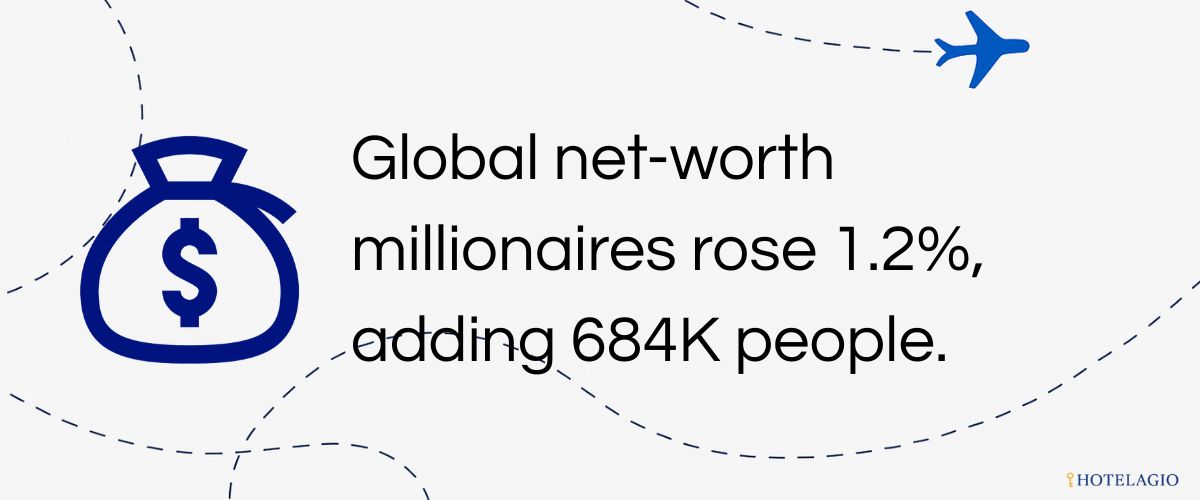
According to UBS’s latest Global Wealth Report, the number of USD millionaires rose 1.2% last year, about 684,000 more people, driven largely by gains in North America.
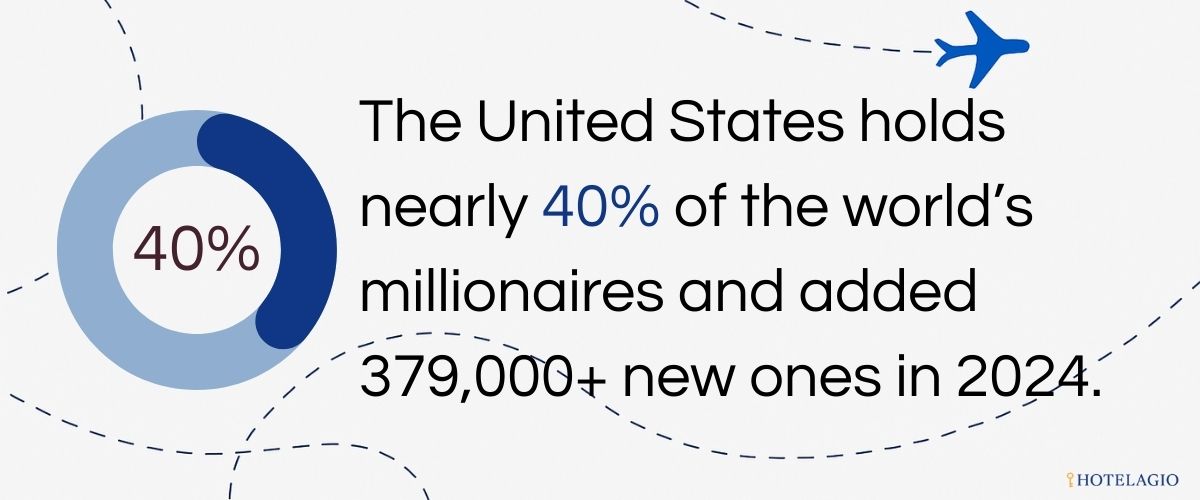
The United States alone accounted for nearly 40% of global millionaires and produced over 379,000 of the new ones.
Another lens, Capgemini’s World Wealth Report—tracks “HNWIs” (people with investable assets of $1 million+). It shows the global HNWI population grew 2.6% in 2024 to about 23.4 million, with the U.S. adding ~562,000 to reach ~7.9 million HNWIs.
Different scope, similar story: wealth tilted toward the U.S. as strong markets lifted portfolios.
Key Millionaire Stats
The world now counts over 22 million millionaires, a number that has more than doubled in the past decade.
The United States alone is home to roughly 38% of the world’s millionaires, far more than any other country.
The global millionaire population is expected to grow by 35–40% over the next five years, even with economic cooling in some regions.
More than half of U.S. millionaires are self-made rather than inheritors, according to several major wealth surveys.
Millennials and Gen Z still hold a small share of global wealth, but their millionaire population is increasing faster than any other demographic.
Roughly 1 in 20 adults in Switzerland is a millionaire, one of the highest millionaire densities worldwide.
Real estate remains the top wealth driver: nearly 30% of millionaires cite property as their primary source of wealth.
Women account for at least 12–15% of the global ultra-wealthy population, and the share is rising steadily.
Despite talk of crypto millionaires, fewer than 4% of millionaires built most of their wealth in crypto.
A typical millionaire allocates 25–35% of their assets to equities, making stock markets one of their largest growth engines.
The number of millionaires in Asia is projected to overtake Europe by the end of the decade, driven mostly by China and India.
High-net-worth individuals (HNWIs) contribute approximately 70% of global philanthropic giving, although the distribution varies widely.
The pandemic years created an unusual spike: 2020 and 2021 produced the fastest millionaire growth ever recorded, mainly through asset price surges.
What exactly counts as a “millionaire”?
There are two common definitions:
Net-worth millionaires: total assets minus debts ≥ $1,000,000 (UBS’s framing).
HNWIs: investable assets ≥ $1,000,000 excluding a primary residence and collectibles (Capgemini’s framing).
Stats vary because those definitions cover different people. I cite the definition alongside each number.
Key numbers you should know
Global millionaires (net worth): Up 1.2% in 2024; +684,000 people. The U.S. created >379,000 of them; the U.S. holds ~40% of all millionaires. Source: UBS (net-worth lens).
Everyday millionaires (investable $1–5M): UBS estimates ~52 million “EMILLIs” worldwide—evidence that mass-affluent wealth has broadened. UBS definition.
Global HNWIs (investable assets):~23.4 million in 2024, $90.5 trillion in wealth; North America HNWIs up 7.3%; U.S. HNWIs up 7.6% to ~7.9 million. Capgemini HNWI lens.
UHNW (≥$30M net worth):~511,000 worldwide by mid-2025, controlling ~$60 trillion. Altrata/Wealth-X lens.
Millionaire migration (2025 projection):142,000 millionaires expected to relocate across borders; U.K. flagged for a large net outflow. Henley & Partners (HNW definition).
Where are millionaires growing fastest?
United States: Dominated 2024’s creation of new millionaires; UBS notes the U.S. added >379,000 net-worth millionaires. Capgemini shows the U.S. HNWI base reaching ~7.9 million.
Regional picture (HNWI): North America led with +7.3% HNWI growth; Asia-Pacific rose +2.7%; Europe and the Middle East saw declines.
$10M+ cohort: People worth $10 million+ rose 4.4% in 2024, with North America up 5.2%, underscoring strength at the top end.
Millionaires by country: who leads?
United States remains the clear No. 1 by both measures (net-worth millionaires and HNWIs). UBS says the U.S. now represents almost 40% of all global millionaires.
China and France ranked behind the U.S. on UBS’s millionaires count.
On the HNWI tally, Capgemini’s 2025 press notes the U.S. at ~7.9M HNWIs; Japan and Germany remain among the largest HNWI markets. A European summary highlights Japan ~4.0M and Germany ~1.6M HNWIs in 2024.
Tip: Country rankings shift more in HNWI data when market prices, FX moves, and rate changes swing portfolio values.
How concentrated is wealth at the very top?
Ultra-wealthy individuals (≥$30M) are a tiny slice of the millionaire universe but hold an outsized share of wealth:
~511,000 UHNWIs globally by mid-2025, with ~$60T combined wealth. That’s roughly a third of HNW wealth in some estimates.
Knight Frank also reports continued growth in the $10M+ group, indicating strength even below the UHNW cut.
Are millionaires on the move?
Yes—2025 could set a record. Henley & Partners projects 142,000 millionaires will change country of residence this year, reflecting tax changes, lifestyle moves, and new wealth hubs (notably in the Gulf). As with any model, treat projections with care, but the directional trend—more cross-border millionaire migration—is clear.
It depends on definition. UBS (net worth) reports a +1.2% rise and ~684,000 new millionaires in 2024, with the U.S. holding ~40% of the global total. Capgemini’s HNWI metric counts ~23.4 million people with investable assets ≥$1M.
Which country has the most millionaires?
The United States, by a wide margin, on both net-worth millionaires and HNWIs. UBS also lists mainland China and France among the top markets by millionaire count.
How many ultra-wealthy people are there?
Roughly 511,000 people worldwide have $30M+ in net worth as of mid-2025, with about $60T in combined wealth.
Are more millionaires moving countries?
Yes. A record 142,000 millionaires are projected to relocate in 2025, per Henley’s annual migration report.
Why do sources disagree?
They measure different things. UBS uses net worth; Capgemini uses investable assets; Altrata focuses on $30M+ net worth. Each publishes its own model and coverage.
Alison is a travel writer for Hotelagio with a passion for solo adventures and photography. She seeks out unusual destinations and hidden gems, sharing stories that inspire curiosity and exploration. Her work has been featured in outlets including Forbes, CNN, Travel + Leisure, and Yahoo.
Emily Hayes has loved traveling since her student days, when she first started sharing her stories and photos in magazines. Now she writes for Hotelagio, making sure every piece of content is inspiring and helpful for fellow travelers.
0 Comment
Sign in
Sign up
Sign in to your account
Create an account
Sign Up
Reset Password
Cookie Consent
We use cookies to improve your experience on our site. By using our site, you consent to cookies.



0 Comment