

A logo is often the first handshake a brand has with a customer, and the numbers back that up.
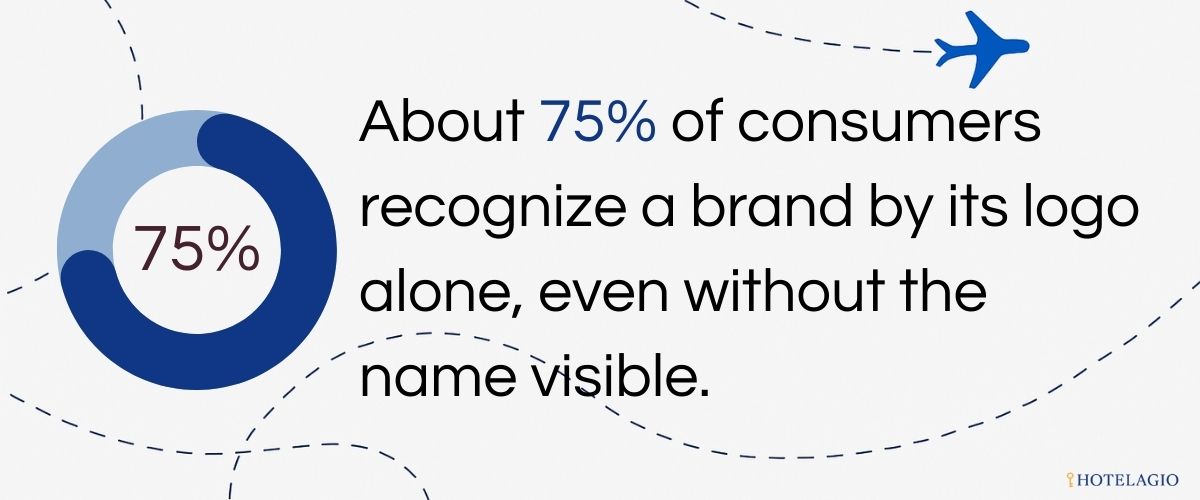
About 75% of consumers say they recognize a brand just by its logo, even when the name isn’t visible.
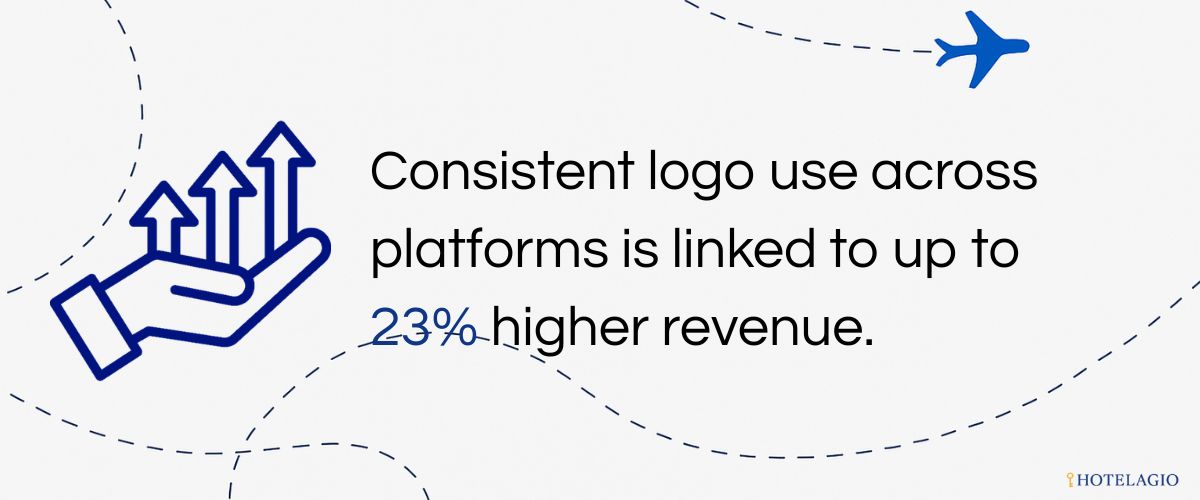
Consistency matters too: using the same logo across platforms is linked with up to a 23% lift in revenue, a reminder that design is not just decoration, it’s distribution and trust.
Preference plays a defensive role as well. Roughly 60% of consumers avoid buying from brands with logos they find outdated or unappealing, which explains the steady cadence of refreshes you see each year.
And 80% of people say color is critical to how they perceive a brand, shaping both memorability and recognition. Put together, these stats make a simple case: a clear, consistent, color-savvy logo isn’t a nice-to-have, it is a business lever.
Key Logo Stats
- About 75% of consumers say they recognise a brand just by its logo, even without seeing the brand name.
- Consistent use of a logo across platforms is linked with up to 23% higher revenue for companies.
- Roughly 60% of consumers report that they avoid buying from brands whose logos they find outdated or visually unappealing.
- 80% of people say that color plays a critical role in how they perceive a brand, influencing memorability and brand recognition.
- Over 50% of small businesses rely on online logo-maker tools (including AI-powered services) rather than hiring professional designers.
- Among U.S. adults, 55% prefer simple logos, and 52% favour logos with bold colors rather than neutral ones, simplicity and contrast often win in logo design.
- Approximately 56% of Gen Z consumers have bought a product partly because they found the company’s logo interesting, indicating logo design still matters for younger audiences.
- About 14% of American adults believe a brand should never change its logo, which shows that many value consistency and legacy in brand identity.
- Studies of rebranded companies show that a well-executed logo redesign (perceived as appropriate and familiar) can improve brand loyalty, especially if the redesign respects core identity elements.
- Logos combining text with visual elements remain popular: roughly 94.6% of logos include text, while about 76.2% use both text and a visual/iconic component, reflecting the dominance of hybrid logo types in branding.
Is logo work actually growing?
Trademark filings are a useful proxy for new brands and refreshed identities. Globally, trademark applications totaled 11.6 million in 2023, a moderate dip from 2022 but still near record territory. In short, the brand pipeline remains strong.
In the U.S., trademark classes filed climbed to 767,138 in FY 2024, underscoring steady demand for new marks and the legal protection that follows logo work.
Which design trends are winning right now?
Simplicity and adaptability dominate. Survey data shows consumers reward brands that feel simple and clear. That preference, paired with multi-screen use, explains why so many identities strip down shapes, reduce detail, and rely on strong typography.
On the implementation side, the web is going vector. Inline SVG adoption passed the 50% mark in 2024, and SVG files continue to grow as a share of images. SVG scales cleanly on high-density screens, supports motion, and can respond to CSS and system settings.
Dark mode is another practical driver. Even though most logos still ship a single colorway, only 12% of sites have implemented prefers-color-scheme. Expect more brand systems to include dark-ready and light-ready logo variants as this adoption rises.
How are tools and workflows changing?
Generative AI has moved into creative workflows. Adobe’s 2024 research found 70–75% global adoption among creative pros, with U.S. usage higher. Independent coverage later cited 86% of creators using AI in their process. For identity projects, that often shows up in ideation, moodboards, and visual exploration—not in final vector marks.
Are rebrands actually happening, or is it just buzz?
They are happening, and they tend to cluster around business inflection points. Round-ups of 2024 identity updates show high-profile examples across tech, finance, and consumer brands, reflecting a broader return to approachability, flatter rendering, and stronger typography. Treat lists as directional reading rather than comprehensive counts, but they reflect a real cadence of updates.
What technical choices are most common for modern logos?
- Vector first. SVG is increasingly standard for digital logos due to resolution-independence and small file sizes. Web data confirms broad adoption of inline SVG and steady use of SVG files.
- Multiple contexts. Sites that honor user preferences with prefers-color-scheme are still a minority at 12%, but the direction is clear: more brands are preparing dark and light variants.
- Performance awareness. On many pages, the LCP image is still JPG or PNG, but SVG’s role is growing as designers remove unnecessary raster textures from wordmarks and icons.
Adoption signals designers should watch
| Signal | Latest datapoint | Why it matters |
|---|---|---|
| Global trademark demand | 11.6 million applications in 2023 | A proxy for new brands and logo work. |
| U.S. trademark classes | 767,138 in FY 2024 | Sustained pipeline of protected marks. |
| Inline SVG on mobile pages | 51.6% in 2024 | Logos are more often shipped as vectors. |
| SVG as an image format | 6.4% of images on mobile | A small but meaningful share for logos/icons. |
| Sites using prefers-color-scheme | 12% in 2024 | Dark-mode compatible logo variants are underused. |
| Willingness to pay for simplicity | 64% | Simpler identities align with consumer preference. |
What does all of this mean for your next logo?
- Build for simplicity. It aligns with consumer preference and makes your mark more legible at small sizes.
- Ship vectors. Make SVG your default for web and app, and include a fall-back raster pack for legacy surfaces.
- Prepare for modes. Deliver light and dark variants, and test both against accessibility guidance and real backgrounds. Adoption is still low, which is exactly why using it is a visible win.
- Expect AI in the room. Use it to explore directions quickly, then refine by hand in vector. Keep provenance and licensing clean.
What logos do hotels prefer, and which hotel logos are most recognizable?
Hotel brands sit at the intersection of signage, screens, and print, so their logos have to work on a roadside pylon at 60 mph, on a reception bell, and in a mobile app. That mix drives a few clear preferences.
What hotel companies typically choose
- Wordmarks and monograms over complex symbols. Chains favor readable letterforms that scale and light well on exterior signage. Luxury tiers often use refined serif wordmarks or monogram crests; lifestyle and select-service brands lean into simpler sans-serif wordmarks for legibility on mobile.
- High contrast, limited colors. Black, charcoal, deep blue, and gold remain common at the premium end; brighter, friendlier palettes show up in midscale and lifestyle flags where differentiation on OTAs and maps is crucial.
- Flat or very light shading. Minimal depth reads better in channel listings, app icons, and dark mode. Most groups now deliver both light and dark variants for digital use.
- Geometry that survives distance. Strokes and counters are kept open so the logo remains legible on freeway signs, backlit canopies, and small loyalty badges.
Hotel logos guests tend to recognize
Below are widely recognized global marks and why they stand out. This is not a ranking—just a concise look at recognition drivers you can emulate.
| Brand | Primary mark type | Why it’s memorable in the wild |
|---|---|---|
| Marriott | Monogram plus wordmark | Bold “M” with generous strokes; reads on signage and app tiles; consistent use across sub-brands. |
| Hilton | Wordmark with stylized “H” heritage | Clean letterforms and spacing; high contrast on façades; strong loyalty tie-ins. |
| Hyatt | Wordmark with arc heritage | Open counters and balanced weight; easy to reverse on photography; consistent across Park/Grand/Hyatt Place systems. |
| IHG | Compact lettermark | Simple, blocky forms that scale; plays well with a wide brand portfolio. |
| Four Seasons | Tree emblem plus serif wordmark | Distinctive symbol that signals luxury; holds detail even in metal appliqués and embossing. |
| The Ritz-Carlton | Lion and crown crest plus serif | Heritage cue that survives small sizes via simplified line work in digital formats. |
| Accor | Stylized “A” plus wordmark | Angular symbol recognized across regions; pairs with diverse lifestyle sub-brands. |
| Best Western | Encapsulated BW monogram | High-contrast badge that pops on roadside totems and OTA thumbnails. |
FAQ
Is there a “right” time to redesign a logo?
There is no universal cycle. Look for business triggers: a new strategy, naming shift, product expansion, or legibility issues in digital contexts. Use trademark protection as your legal backstop.
Should every logo be flat now?
Flat or semi-flat styles tend to scale better across screens. The data shows more vector usage on the web and consumer preference for simplicity, but style still depends on your category and brand voice.
Do I need different logos for dark mode?
Provide approved light and dark variants or a single mark that adapts via CSS with prefers-color-scheme. Many sites still lack this, so it’s a practical differentiation.
Are AI-generated logos production ready?
AI is helpful for ideation, not final identity. Creative pros report high adoption of AI tools, but durable trademarks still rely on original, vector, legally clear artwork.
Sources
- WIPO — World Intellectual Property Indicators 2024: Trademarks Highlights
- USPTO — Trademark Public Advisory Committee Annual Report 2024
- HTTP Archive (Web Almanac 2024) — Markup
- HTTP Archive (Web Almanac 2024) — Media
- HTTP Archive (Web Almanac 2024) — Accessibility
- Siegel+Gale — Global Simplicity research highlights
- Adobe — Creative Pros and Generative AI (2024 newsroom coverage)
- TechRadar — Coverage of creator AI usage surveys (2024)
- Creative Bloq — 2024 Rebrand Roundups
- btrax — 2024 Brand/Logo Trends & Rebrands

0 Comment