


Screen stories are moving real travelers.
In Expedia’s latest global trends report, two-thirds of respondents say movies and TV have influenced where they travel, and several hit shows have triggered triple-digit surges in destination searches after release.
Key film tourism stats
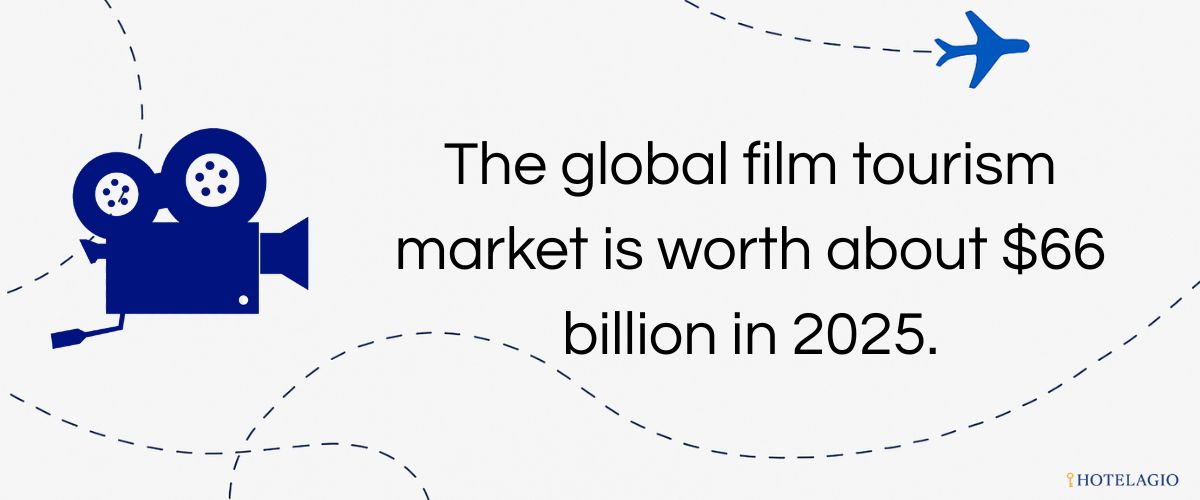
- USD ~66 billion (2025) is the baseline estimate for the global film tourism market, projected to more than double to ~USD 145 billion by 2035 as cinematic travel gains momentum.
- Some forecasts push that number even further, up to USD 300 billion by 2032, reflecting strong optimism in immersive and streaming-driven travel.
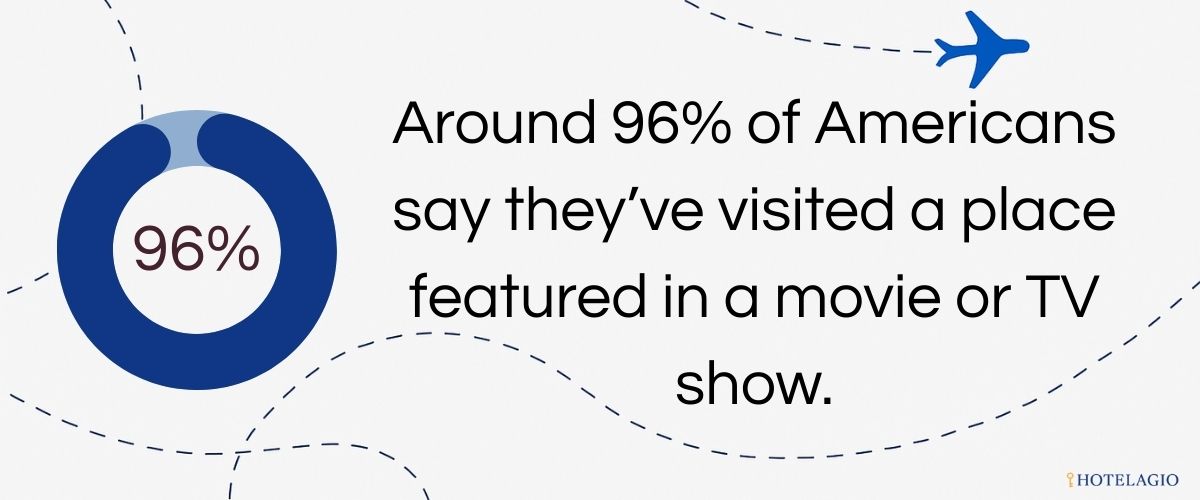
- 96 % of Americans say they’ve visited a place tied to their favorite movie or TV show — film tourism is more common than you might think.
- A variety of blockbuster-driven boosts: Frozen reportedly increased tourism to Norway by 37 %, The Beach gave Thailand’s locales a 22 % influx, Braveheart locations saw up to 300 % spikes.
- In 2017 alone, around 80 million international tourists made travel decisions based (in part) on visiting filmed locations worldwide.
What are the headline numbers for film tourism in 2025?
- Influence: Two-thirds of travelers say films, streaming and TV influenced their trip choices; 36% say screen media is more influential on plans than last year.
- Demand spikes tied to shows: The White Lotus drove a 300% jump in travel demand to Hawaii and Sicily; Wednesday led to a 150% surge in searches for Romania; Emily in Paris lifted searches to Paris by 200%. Ted Lasso boosted searches for Richmond, London by 160% after season 2 and they doubled after season 3.
- UK economic impact baseline: Inbound tourists spent an estimated £597.7 million in film-related screen tourism in 2016, supporting 13,440 FTE jobs and £628.3 million in GVA; related HETV spillovers add thousands more jobs.
How big is the economic impact, and where is it measured best?
The UK remains one of the most rigorously measured screen-tourism markets.
The BFI’s Screen Business analysis (cited by VisitScotland) attributes hundreds of millions of pounds of inbound visitor spend and more than 13,000 FTE jobs to film-related tourism in a single year, with additional HETV spillovers. This gives policymakers a defensible baseline for ROI cases that pair production incentives with destination marketing.
A Northern Ireland case study shows how a single franchise can reshape demand. Tourism NI estimated around 350,000 leisure visitors a year were motivated by Game of Thrones in 2018–19, spending in excess of £50 million across experiences linked to 26 filming locations.
Do we have hard proof that shows can lift arrivals, not just searches?
Yes. Peer-reviewed work quantifies arrivals and overnights.
For Dubrovnik, difference-in-differences and synthetic-control studies find Game of Thrones corresponded to roughly 59,000 additional tourism overnights per year. Field reporting in 2025 still notes approximately 1,000 travelers joining GoT tours daily in peak periods, underscoring continued commercial traction years after the finale.
New Zealand’s Hobbiton Movie Set remains a durable example. The site expected about 570,000 visitors in the 2023–24 season, up from 530,000 the year prior, reflecting persistent Lord of the Rings and Hobbit interest.
Which titles are moving the needle right now?
Expedia’s Unpack ’25 list highlights destinations linked to current or recent releases where set-jetting remains strong: Dubai (The Real Housewives of Dubai), Scotland (The Traitors), Montana and Wyoming (Yellowstone), New York City (And Just Like That…), Mexico City and others. These forecasts sit atop the broader stat that two-thirds of travelers are influenced by screen media.
In Europe, national agencies actively court and convert interest. VisitBritain’s screen-tourism hub compiles evidence that film and TV exposure shapes destination choice and disperses travel beyond London when supported by touring itineraries and themed experiences.
Case studies at a glance
| Title or trend | Location(s) | Measured effect |
|---|---|---|
| The White Lotus (S1–S2) | Hawaii, Sicily | 300% increase in travel demand to featured regions after seasons aired (Expedia data). |
| Wednesday | Romania | 150% surge in searches for Romania after release. |
| Emily in Paris | Paris | 200% increase in Paris searches after a previous season; ongoing tourism board and media attestations of impact. |
| Game of Thrones | Dubrovnik, Croatia | ~59,000 extra overnights per year in econometric studies; ~1,000 daily tour participants cited in 2025 reporting. |
| Game of Thrones | Northern Ireland | 350,000 leisure visitors annually; spend >£50m tied to locations and experiences (2018–19). |
| Lord of the Rings/Hobbit | Hobbiton, New Zealand | 570,000 expected visitors in the 2023–24 season (up from 530,000). |
How do destinations turn screen buzz into sustainable visitation?
Three levers recur in successful programs:
- Tie-in product quickly (official tours, trails, museum or set experiences).
- Disperse demand beyond the hero site to nearby towns and off-season windows.
- Manage capacity to avoid overtourism. Even European heritage spots have tightened controls when TV fame overstretched infrastructure, so pairing marketing with visitor-management plans matters.
Are there signs the trend is growing, not fading?
Yes. The 2024–2025 cycle shows both renewed demand and institutional alignment.
Expedia’s Unpack ’25 quantifies influence at two-thirds of travelers, while public-sector players like VisitBritain and Tourism Northern Ireland formalize screen-tourism strategies and partnerships.
This mix of first-party platform data, government strategy, and long-tail case studies suggests sustained momentum rather than a fad.
FAQ
What is film tourism or set-jetting?
Travel to places featured in films and TV (including studio sets, standing sets, filming locations, and story-inspired routes). VisitScotland uses “screen tourism” interchangeably and frames it as a visit motivated by filmed content.
How big is the influence today?
Two-thirds of global travelers report film and TV influence their travel choices. Several specific shows have driven triple-digit search or demand spikes for featured destinations.
Is there real economic impact, not just marketing hype?
Yes. The UK’s measured 2016 figure shows £597.7m in film-related tourist spend and 13,440 FTE jobs tied to screen tourism, with additional HETV spillovers.
What’s a strong before-and-after example?
Dubrovnik’s Game of Thrones impact has been quantified in academic work at roughly 59,000 extra overnights per year, with commercial tours still drawing heavy daily volumes.
Does the effect last?
It can, when destinations productize and manage demand. New Zealand’s Hobbiton continues to attract well over half a million visitors per season.
Sources
- Expedia Group — Unpack ’25 Trend Report (PDF)
- Expedia Newsroom — Introducing Unpack ’24: The trends in travel from Expedia
- VisitScotland — The Outlander Effect & Tourism (screen tourism context and BFI citation)
- Tourism Northern Ireland — Annual Report 2019–2020 (GoT visitors and spend)
- Screen Network (UK) — Screen Tourism (overview with NI figures)
- Applied Economics Letters — Television-Induced Tourism: Evidence from Croatia (Dubrovnik and GoT)
- Reuters — Dubrovnik film tourism context and tour volumes (2025)
- Waikato Business News — Hobbiton visitor numbers 2023–24
- VisitBritain — Screen Tourism research hub
- Euronews Travel — Set-jetting and overtourism concerns

0 Comment