


Destination marketing isn’t just about glossy ads anymore.
It’s a data-driven growth lever for cities, states, and nations—measured in jobs, tax revenue, and community impact.
In 2024, travel and tourism contributed $10.9 trillion to global GDP and supported 357 million jobs, roughly one in ten worldwide.
International tourism reached about 1.4 billion arrivals in 2024, essentially back to pre-pandemic scale.
Those tailwinds set the stage for DMOs to compete—and to prove ROI.
Key Stats: Destination Marketing
- Tourism’s global economic footprint rebounded to $9.9 trillion in 2023, driving renewed competition among destinations.
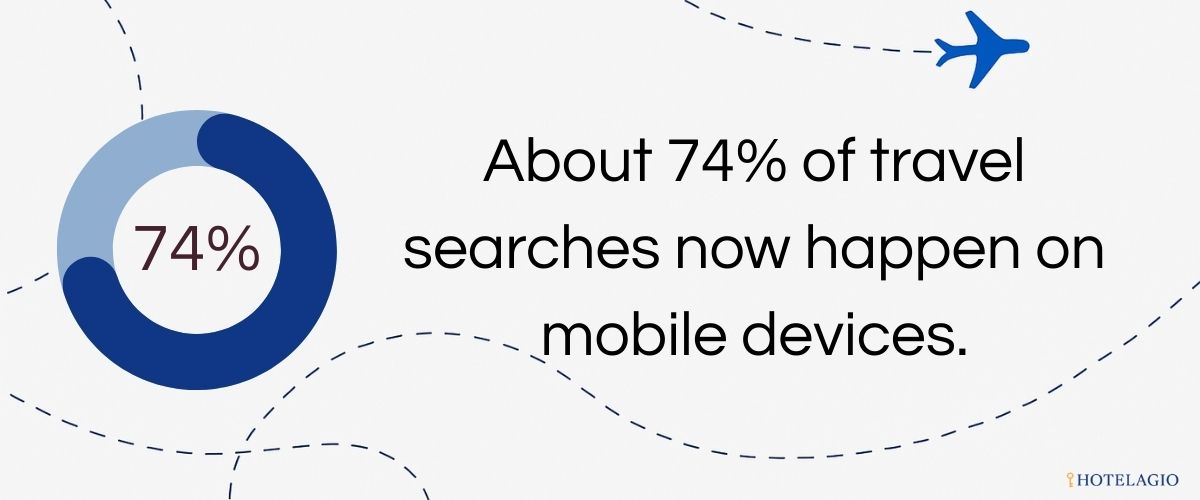
- 72% of travelers respond to personalized recommendations, and 74% of travel searches are now mobile-first — personalization and mobile optimization are no longer optional.
- 66% of travelers watch online videos before choosing where to go; 44% cite TikTok/Reels/Shorts as their top inspiration source.
- Influencer content outperforms standard ads with 3–5× higher CTR, while DMOs allocate ~37% of digital budgets to social ads.
- Email campaigns with dynamic personalization deliver 27–35% higher open rates, proving the value of direct channels.
- Sustainability messaging resonates: 65% of travelers say they’re more likely to book eco-friendly stays if promoted by the destination.
- Data-driven marketing is now standard: 84% of DMOs use audience targeting and 60%+ leverage first-party data for retargeting.
- Campaign ROI is strong — integrated paid search + retargeting can deliver ~10:1 ROAS.
- Travelers increasingly prioritize experiences over hotels: 49% of leisure tourists rank activities as their top decision factor.
What are the headline destination marketing stats right now?
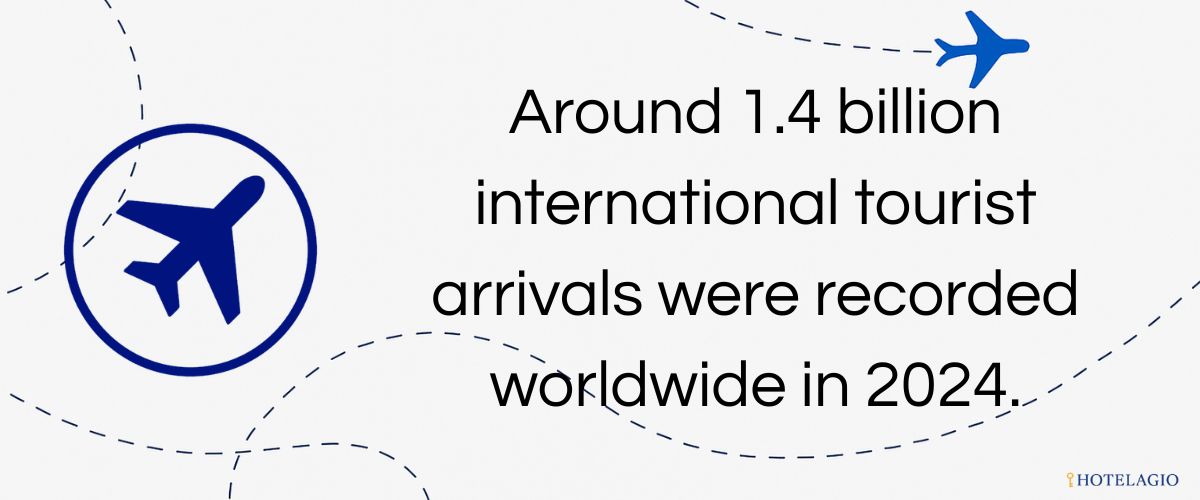
- Global demand: 2024 international arrivals reached ~1.4 billion; UN Tourism calls it a near-complete recovery.
- Economic weight: Travel and tourism’s GDP impact was $10.9T in 2024; jobs totaled 357M globally.
- DMO mandate shift: 84% of destination organizations say they’re now actively involved in destination development, not just promotion. 42% see their funding at risk within three years. KPIs are shifting toward resident sentiment and community benefit.
- Marketing ROI benchmarks (North America): A meta-analysis of 26 destinations found an average $85 in visitor spending and $9 in tax revenue for each $1 invested in promotion. 20 of 26 posted $35+ in spending return per $1.
How strong is the ROI from destination promotion?
The newest cross-destination analysis is clear: promotion pays for itself many times over.
- Meta-benchmarks: Across 26 recent studies (2021–2023), average returns were $85 of incremental visitor spend and $9 of tax revenue per $1 of media spend. A majority of campaigns delivered $35–$110+ per $1.
- National case: Brand USA FY2024 marketing generated 1.61M incremental visitors, ~$5.9B in visitor spending, and an ROI of $23.37 per $1 including overhead (Oxford Economics).
- City case: Visit Denver (2024) reported 3.0M incremental trips, $1.3B incremental spending, and $24 in taxes per $1 ad spend, equaling $217 spending ROI per $1 invested.
- State example: South Dakota 2023 ad effectiveness: $45 in direct spending and $3 in taxes per $1 spent.
ROI Benchmarks (latest available)
| Program / Study | Latest year | Incremental visitors | Spend ROI per $1 | Tax ROI per $1 |
|---|---|---|---|---|
| Brand USA (Oxford Economics) | FY2024 | 1.61M | $23.37 | — |
| Visit Denver | 2024 | 3.0M | $217 | $24 |
| Longwoods/DI meta-analysis (26 campaigns) | 2021–2023 | — | Avg $85 | Avg $9 |
| South Dakota | 2023 | — | $45 | $3 |
Sources: Oxford Economics/Brand USA; Visit Denver; Destinations International & Longwoods; South Dakota Dept. of Tourism.
Where is global demand heading—and why does it matter to DMOs?
UN Tourism’s latest barometer confirms 2024’s recovery to roughly pre-pandemic levels (~1.4B arrivals) and continued growth into 2025.
WTTC’s 2024 accounting shows sector GDP at $10.9T and employment at 357M; recent outlooks point to further job gains in 2025.
For Europe, WTTC projected 11% higher international tourist spending in 2025, with Spain set for another record year after 94M visitors in 2024. For U.S. inbound, NTTO forecasts 77.1M international visitors in 2025. These macro signals influence DMO budgeting and media timing.
Global Demand Pulse (context)
| Indicator | Latest datapoint |
|---|---|
| International tourist arrivals | ~1.4B in 2024 (near full recovery) |
| Travel & tourism GDP | $10.9T in 2024 (10% of world GDP) |
| Sector jobs | 357M in 2024 |
| Europe 2025 tourist spend | +11% vs. 2024 (WTTC projection) |
| Spain arrivals | 94M in 2024 (record) |
Sources: UN Tourism; WTTC; AP; Reuters.
How are DMOs changing what they measure?
The 2025 DestinationNEXT Futures Study finds a structural shift: DMOs are judged not only by visitation and spend, but also by resident sentiment, sustainability, and community benefit. 84% report active roles in destination development; 42% say their funding is at risk—making advocacy and diversified revenue models more urgent.
- Resident sentiment is now a core KPI. DI and partners report rising public support when DMOs communicate benefits and manage impacts.
- Group sales still matter. Across DI case destinations, the average spend per overnight event visitor was $628 and $31 in local taxes per attendee night tied to room blocks.
What does the traveler path to purchase look like now?
Destination decisions are made over weeks, across many touchpoints—an argument for always-on content and full-funnel media.
- Timeframe: The online shopping journey averages ~71 days from first research to booking.
- Content load: Travelers view ~141 pages of travel content in the 45 days before booking; on average they spend ~303 minutes with travel content, and vacation-rental shoppers alone rack up ~511 minutes.
- Demand outlook: In 2025 surveys, 88% of consumers plan a leisure trip in the next 12 months and 68% are likely to book international travel.
Path-to-Purchase Signals
| Metric | Latest value |
|---|---|
| Average journey length | ~71 days |
| Pages consumed pre-booking | ~141 pages |
| Time with travel content | ~303 minutes |
| Vacation-rental content time | ~511 minutes |
| Likely to book international | ~68% |
How are destinations funding the work?
With traditional appropriations under pressure, many U.S. destinations are supplementing with Tourism Improvement Districts (TIDs) and similar assessments.
- A current industry tally lists about 194 TIDs across the U.S., active in 18 states with more considering legislation.
- Studies comparing cities with and without TIDs found +2.1% hotel room demand and +4.5% hotel revenue in TID markets over time.
What should DMOs prioritize in 2025?
- Advocacy and funding resilience: With 42% of organizations seeing funding risk, make the economic case and diversify revenue.
- Always-on, full-funnel media: The 71-day, 141-page decision path rewards consistent inspiration, mid-funnel content, and book-now clarity.
- Community-first metrics: Track resident sentiment and share outcomes on jobs, taxes, and quality of life.
- Proof of impact: Use standardized ROI methods; cite meta-benchmarks ($85 spend and $9 tax per $1) and local case studies.
FAQ: Destination Marketing
Is destination marketing still worth the money?
Yes. A 26-campaign meta-study found average returns of $85 in visitor spending and $9 in taxes per $1 of promotion.
How long do I need to run a campaign before it works?
Plan for a multi-week journey: around 71 days from inspiration to booking on average, with heavy content consumption.
What KPI should I report beyond visitation and spend?
Include resident sentiment, environmental metrics, and community benefit, reflecting the sector’s broader mandate.
What are credible national ROI numbers?
Brand USA FY2024 delivered $5.9B in incremental spend and $23.37 ROI per $1 including overhead.
What’s the global context DMOs should cite in budget talks?
Travel and tourism added $10.9T to global GDP in 2024 and supported 357M jobs; international arrivals hit ~1.4B.
Sources
- UN Tourism — World Tourism Barometer, January 2025 (Excerpt)
- WTTC — Travel & Tourism Economic Impact 2024/2025
- Destinations International — DestinationNEXT Futures Study 2025
- Destinations International & Longwoods / Tourism Economics — Destination Promotion: A Catalyst for Community Vitality (2024)
- Brand USA / Oxford Economics — FY2024 Economic Impact (overview) and ROI Report (PDF)
- Visit Denver — 2024 Advertising ROI Release
- South Dakota Dept. of Tourism — 2023 Advertising ROI Research
- Expedia Group (Advertising/Media) — Traveler Purchasing Journey (avg. 71 days), Path to Purchase 2023 (141 pages), Newsroom brief (303 minutes), Vacation rental snapshot (511 minutes), 2025 Traveler Value Index
- Reuters — International tourist spending in Europe seen up 11% in 2025
- AP — Spain sets a new record with 94 million international tourists in 2024
- NTTO (U.S. Dept. of Commerce) — International Visitation Forecast to the U.S. (2025)
- Visit Quad Cities — Tourism Improvement Districts overview and counts
- Simpleview (citing Tourism Economics) — TID performance study summary

0 Comment