


Dark tourism — travel to places linked with death, disaster, or human suffering — keeps drawing big crowds.
In 2024, the Auschwitz-Birkenau Memorial recorded 1.83 million visitors (up ~10% year over year).
In New York, the 9/11 Memorial & Museum welcomed 2.4 million museum visitors and 11.6 million to the memorial.
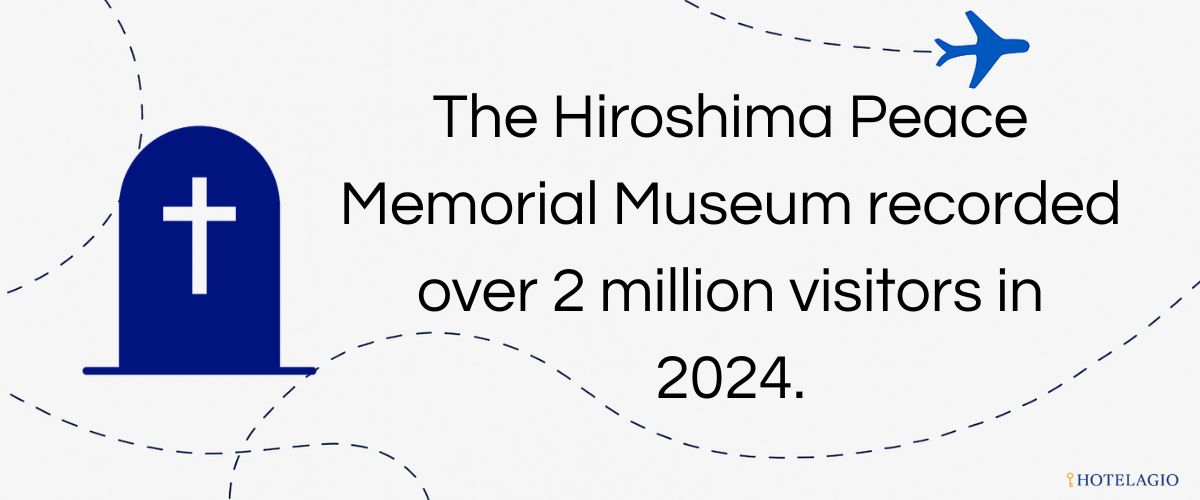
And in Japan, the Hiroshima Peace Memorial Museum topped 2 million visitors in fiscal 2024, a new high.
These aren’t isolated cases.
Pompeii reached more than 4 million visitors in 2024 and introduced a 20,000 daily cap to protect the site.
The Pearl Harbor National Memorial drew ~1.59 million visits in 2024, making it one of the most visited U.S. memorial sites.
Key Stats: Dark Tourism
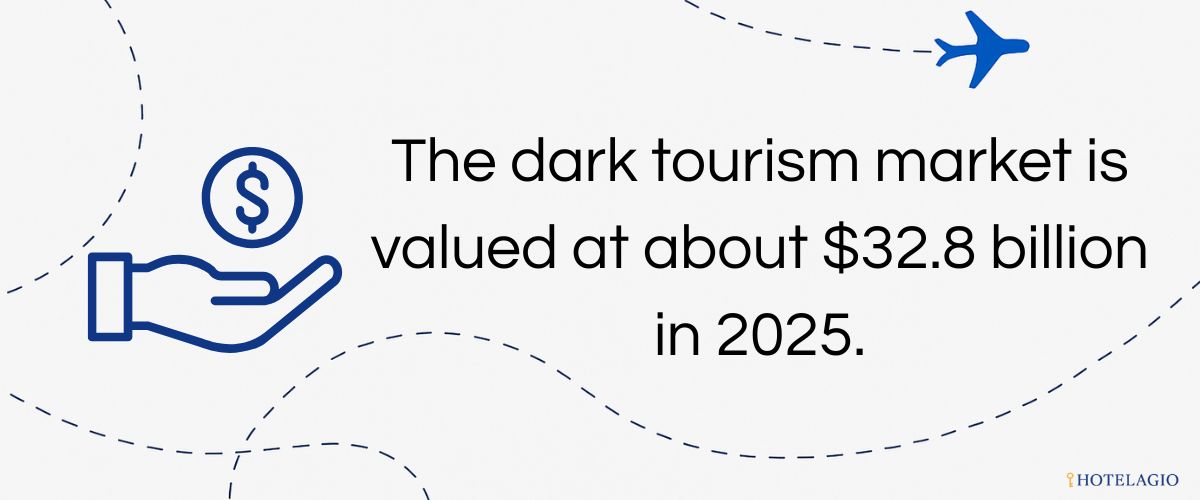
- The dark tourism market is booming: estimated at ~USD 32.8 billion in 2025, with forecasts pushing it toward USD 39–40 billion by 2030-2033.
- Visit penetration in the U.S. is really high — 82% of Americans have been to at least one dark site; many of those who haven’t are still interested.
- Younger generations are especially engaged: ~91% of Gen Z, 83% of Millennials have visited dark tourism sites; figures decline somewhat for older cohorts.
- Auschwitz saw ~1.83 million visitors in 2024, recovering steadily from pandemic lows but still below its 2019 record of ~2.32 million.
- The increase from 2023 to 2024 at Auschwitz was about 10%.
- Chernobyl had ~124,000 visitors in 2019 (a peak tied to the Chernobyl TV series), but access and tourism have since been affected by geopolitical instability.
- Types of dark tourism with the strongest pull: Holocaust/genocide memorials, battlefields, sites of disasters, places marked by major human tragedy.
- Domestic dark tourism dominates: most people visit sites in their own country rather than traveling internationally for dark sites.
- Geographically, Europe leads the pack in total revenue for dark tourism, but regions like Asia-Pacific are growing fast and contributing more over time.
- Top motivations: learning history/education, paying tribute / remembrance, emotional connection, curiosity about tragedy.
What are the key dark tourism stats right now?
- Auschwitz-Birkenau Memorial (Poland, 2024): 1.83M visitors (+~10% vs. 2023).
- 9/11 Memorial & Museum (U.S., 2024): 2.4M museum visitors; 11.6M at the memorial.
- Hiroshima Peace Memorial Museum (Japan, FY2024): >2.0M (first time ever); foreign visitors ~30%.
- Pompeii Archaeological Park (Italy, 2024): >4.0M visitors; 20,000/day cap introduced.
- Pearl Harbor National Memorial (U.S., 2024): 1,588,798 visits (NPS).
How big is dark tourism — and is it growing?
There’s no single global “dark tourism” counter, but site-level evidence points to growth:
- Auschwitz attendance rose nearly 10% in 2024 versus 2023.
- 9/11 Museum increased from 2.2M (2023) to 2.4M (2024).
- Hiroshima Museum set back-to-back records in FY2023 and FY2024, exceeding 2M for the first time.
- Pompeii hit an all-time high >4M and moved to cap daily entries.
Market researchers track a “dark tourism” segment, but estimates vary widely. Rather than rely on conflicting forecasts, this article emphasizes primary, site-level counts and official reporting.
What exactly counts as “dark tourism”?
Researchers define dark tourism as visiting places where “the darkest events of human history have unfolded” — genocide, war, disaster, or tragedy (e.g., Auschwitz, Hiroshima, Ground Zero, Chernobyl, Pompeii). Motivations range from education and remembrance to paying respects.
Which dark tourism sites draw the most visitors?
Selected Sites & Latest Verified Attendance
| Site & Country | Latest Year | Visitors |
|---|---|---|
| 9/11 Memorial (U.S.) | 2024 | 11,600,000 |
| 9/11 Museum (U.S.) | 2024 | 2,400,000 |
| Pompeii Archaeological Park (Italy) | 2024 | >4,000,000 |
| Hiroshima Peace Memorial Museum (Japan) | 2024 | >2,000,000 |
| Auschwitz-Birkenau Memorial (Poland) | 2024 | 1,830,000 |
| Pearl Harbor National Memorial (U.S.) | 2024 | 1,588,798 |
Sources: official annual reports, government/park statistics, and national media roundups cited throughout.
Are international visitors coming back?
Yes. Hiroshima reports ~30% foreign visitors within its record year. Auschwitz highlights continued international demand, with 2024 exceeding 2023 by ~10% but still trailing pre-pandemic peaks.
Pompeii’s surge reflects both domestic and international recovery, prompting capacity management.
What about Chernobyl and “live” disaster zones?
Chernobyl saw guided tourism grow steadily pre-2022 (after Ukraine moved to formalize access in 2019).
The full-scale war halted visits; authorities now discuss post-war redevelopment and controlled, education-first tourism.
Why are some sites adding caps and new rules?
When visitation spikes, managers balance education, safety, and preservation:
- Pompeii introduced named tickets and a 20,000/day cap after crowds surpassed 36,000 on peak days.
- Memorial museums (e.g., 9/11) continue to expand education programs and collections while managing record footfall at the adjacent memorial.
What do visitors say they want from these places?
Academic and museum studies point to learning, remembrance, and empathy as primary motivations (far more than thrill-seeking). That aligns with the surge in guided interpretation and survivor/testimony archives at sites like Hiroshima and 9/11.
Key takeaways for travel planners and writers
- Use site-level counts (not generic market estimates) when you need hard numbers.
- Expect summer peaks and resource constraints at top sites; check for timed entry or daily caps (Pompeii).
- Build itineraries around education programs and ethical guidelines (no selfies in sensitive zones; follow site photography rules).
Dark Tourism FAQ
What is dark tourism?
Travel to places tied to death, disaster, or human suffering — from Holocaust sites to nuclear memorial museums and disaster ruins.
Which site gets the most visitors?
In 2024, New York’s 9/11 Memorial counted 11.6 million visitors; the Museum had 2.4 million.
Is interest increasing post-pandemic?
Yes. Auschwitz (+~10% YoY), Hiroshima (>2M record), and Pompeii (>4M record) all report strong growth.
Do these places rely on foreign visitors?
Often. Hiroshima’s record year included ~30% international visitors.
Can you visit Chernobyl now?
Regular tourism remains disrupted by the war, but Ukrainian officials have discussed controlled redevelopment post-war.
Sources
- Auschwitz-Birkenau State Museum — 1.83 Million People Visited the Memorial in 2024
- 9/11 Memorial & Museum — Annual Report 2024 (2.4M Museum; 11.6M Memorial)
- The Japan Times — Hiroshima Peace Memorial Museum Tops 2 Million Visitors
- Hiroshima Peace Media Center — Record High Visitors & Foreign Share (~30%)
- Reuters — Pompeii to Cap Daily Visitors at 20,000
- The Art Newspaper — Pompeii Hits 4M+ Visitors (Record)
- NPS Visitor Use Statistics — Pearl Harbor National Memorial: 2024 Visitation (1,588,798)
- World Nuclear News — Chernobyl: Tourism Development Plans Post-War
- The Washington Post — Dark Tourism, Explained (Definition & Context)

0 Comment