


Branding isn’t window dressing, it’s the decision driver.
Eight in ten people say they need to trust a brand before they’ll even consider buying.
A brand that shows up the same way across every touchpoint can lift revenue by up to 23%. And when customers feel an emotional connection, 76% are more likely to choose that brand over a competitor.
Even how you tell your story matters: brands that use strong narrative are remembered up to 22× more than those leaning on product facts alone. Put together, trust + consistency + emotion + story is the modern brand playbook.
Key Branding Stats
- Around 81% of consumers say they need to trust a brand before they consider buying from it.
- A consistent brand presence across channels can boost revenue by up to 23%.
- 76% of people are more likely to purchase from brands they feel connected to emotionally.
- Brands with strong storytelling strategies are 22× more memorable than those relying on product facts alone.
- Color improves brand recognition by up to 80%, making visual identity one of the most influential branding elements.
- Roughly 60% of millennials expect brands to provide a consistent online experience across all touchpoints.
- 59% of shoppers prefer to buy new products from brands they already know and trust.
- A negative brand experience on mobile makes over 50% of users less likely to engage with the brand again.
- 72% of marketers say branded content delivers more engagement than traditional advertising.
- Companies that invest heavily in brand experience outperform competitors by nearly 2× in customer loyalty metrics.
- 82% of investors claim strong branding is becoming more important when evaluating business opportunities.
- Personalization in branding and messaging can lift conversion rates by up to 30%.
- Over 70% of brand managers say maintaining brand consistency is their biggest long-term challenge.
- User-generated content can make a brand appear 2.4× more authentic to consumers compared to polished corporate assets.
- Brands with well-defined values see 5–7× higher customer lifetime value compared to those without a clear identity.
How does brand consistency translate into revenue
The most replicated finding in recent brand management surveys is that consistent presentation across channels correlates with stronger commercial performance.
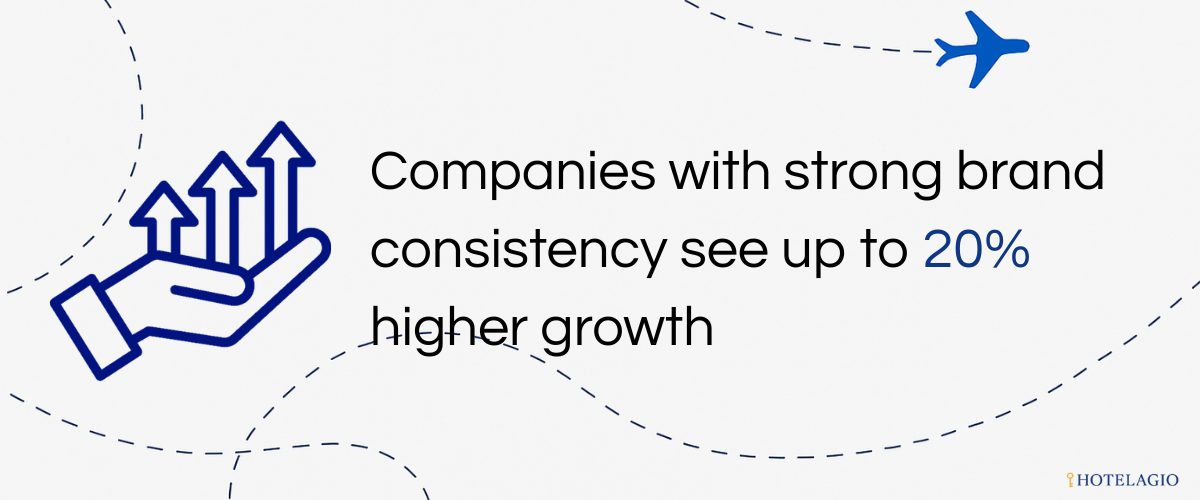
Marq’s roll-up of Lucidpress research shows companies that maintain consistency realize up to 20 percent greater overall growth and as much as 23–33 percent higher revenue versus peers with off-brand content.
The practical drivers are familiarity, ease of recognition, and reduced cognitive friction in purchase decisions.
Brand teams operationalize this through documented guidelines, templated assets, and governance that keeps sales, web, social, and ads aligned.
Even modest enforcement improves message recall and reduces wasted production.
Do simplicity and clarity really change what people pay
Yes. Siegel+Gale’s World’s Simplest Brands research has shown for multiple editions that people put a premium on brands that make life easier.
Recent results cite 64 percent of consumers willing to pay more for simpler experiences and 78 percent more likely to recommend simple brands; prior editions reported similar or slightly lower figures, reinforcing the direction of travel.
The firm also ties simplicity to outperformance in model stock portfolios, suggesting that clarity correlates with durable business execution.
How much do trust and familiarity influence launches
For new products, familiarity lowers risk.
In Nielsen’s global new-product study, a majority of consumers in developed markets said they prefer to try innovations from brands they already know, with the share even higher in developing markets.
That is a direct argument for strong parent-brand signaling on packaging, advertising, and retail.
Do visual choices materially affect first impressions
First impressions form fast, and color does a lot of work.
In a peer-reviewed synthesis, Satyendra Singh concluded that people make up their minds within 90 seconds of initial interactions and that roughly 62 to 90 percent of that assessment is based on color alone.
While a popular claim that color boosts brand recognition by 80 percent is often repeated online, reviewers tracing its origin have found the underlying Loyola attribution to be unsupported. Use the academic result and be cautious with the 80 percent line.
What do the big brand value rankings tell us
Brand valuation models are not the same thing as audited revenue, but they are useful for reading momentum.
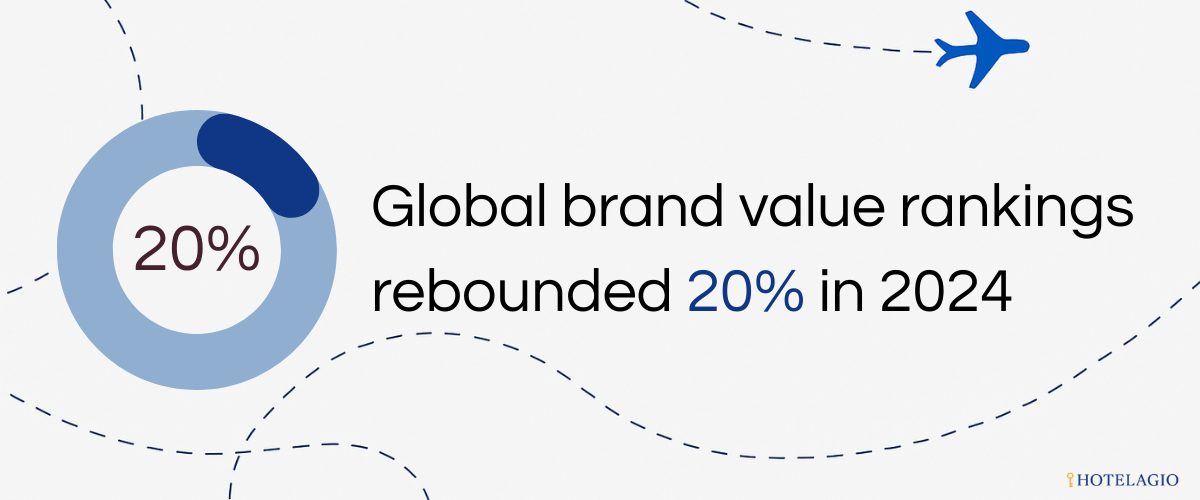
Kantar’s 2024 BrandZ lists show a broad rebound in brand value, with technology brands contributing the bulk of the increase.
Apple crossed the one-trillion-dollar brand value mark, while Nvidia surged into the top ten as AI demand spiked.
These moves reflect a blend of financials, consumer perceptions, and future growth expectations that feed directly into brand equity.
Are loyalty programs still a core lever for brand value
They are, and not just for repeat purchases.
Deloitte’s 2024 consumer loyalty work notes that strengthening loyalty programs is a top growth priority for retail leaders and that many brands now share or plan to share loyalty data with ad platforms to power more tailored offers and media.
That shifts loyalty from a discount engine into a data and personalization engine for the brand.
Quick tables
Brand consistency and simplicity
| Finding | Latest reported figure |
|---|---|
| Revenue lift from consistent branding | 23 to 33 percent |
| Growth advantage from consistent branding | Up to 20 percent |
| Willing to pay more for simple experiences | 64 to 78 percent |
| More likely to recommend simple brands | About two-thirds to nearly four-fifths |
Trust, familiarity, and politics
| Finding | Latest reported figure |
|---|---|
| Prefer to buy new products from familiar brands, developed markets | 57 percent |
| Buying, choosing, or avoiding brands based on politics | 60 percent |
Brand value momentum
| Finding | Latest reported figure |
|---|---|
| BrandZ Global Top 100 change in 2024 | About plus 20 percent |
| First trillion-dollar brand value | Apple passes one trillion |
Branding in hospitality: what works now
Hotel brands live and die on clarity and repeatability.
Guests book fast, often on a small screen, and they want zero friction: a clear promise, consistent design, and benefits that show up on property, every time.
That is why the hotel sector invests heavily in brand architecture, loyalty, and service scripts that translate into real-world moments at check-in, in rooms, and on messaging channels.
Three forces shape hotel branding today:
- Trust at scale
Travel is a high-stakes purchase. Clear promises, responsive service, and honest guest communications build the trust that drives bookings, reviews, and rebookings. The same trust dynamic that drives consumer brands drives hotels. - Consistency across the journey
From the OTA listing to the lobby to the invoice, consistent names, visuals, and tone reduce friction and lift conversion, mirroring the broader finding that consistency correlates with higher revenue. - Story and emotional payoff
Destinations and properties with a story, heritage, community, design, or sustainability—win memorability and word of mouth. The storytelling advantage isn’t abstract; it’s been measured across marketing contexts.
Hotels with the most recognizable branding
This isn’t a “favorites” list. It leans on current brand valuation and strength rankings to highlight brands whose identities are highly recognized and consistently executed.
- Hilton — Most valuable hotel brand globally
Hilton topped Brand Finance’s Hotels 50 in both 2024 and 2025, including a jump to an estimated $15.1B brand value in 2025. The brand’s naming, visual system, and portfolio logic (from Hilton to Hampton and Conrad/Waldorf Astoria) are among the clearest in the category. - Marriott — Global scale and portfolio clarity
While Brand Finance ranks “Hilton” as the single most valuable hotel brand, Marriott’s corporate portfolio and Bonvoy ecosystem make the master brand highly visible across segments. Recent moves (like acquiring citizenM) show how portfolio strategy reinforces brand reach. - Hyatt — Fast-rising brand value
Brand Finance notes strong growth in Hyatt’s brand value in recent editions, driven by clear upscale lifestyle positioning and coherent sub-brands. - Taj (IHCL) — Strongest hotel brand
Brand Finance named Taj the world’s strongest hotel brand in 2025 (AAA+ strength rating), reflecting exceptional familiarity and preference in core markets—proof that a distinct story and service standard scale across properties. - Holiday Inn (IHG) — Enduring mass-market recognition
Within IHG’s portfolio, Holiday Inn remains one of the category’s most recognized midscale names, with decades of consistent positioning and global presence; IHG’s 2024–2025 performance and portfolio actions kept the halo strong.
Branding FAQ
What is the strongest single lever brands can pull?
Keeping brand presentation consistent across channels is repeatedly associated with double-digit revenue and growth gains in recent surveys. The mechanism is simple recognition and reduced decision friction.
Is simplicity really worth money?
Yes. Large, longitudinal studies show a majority of consumers will pay more and recommend simple brands. That pattern has held across multiple editions.
Should I use the claim that color boosts recognition by 80 percent?
Avoid it. Cite peer-reviewed work showing color drives most of the first impression, and steer clear of the unsupported 80 percent line.
Are customers punishing or rewarding brands for political positions?
A significant share say politics shapes their buying, choosing, or avoidance. Plan for clear guardrails and scenario planning before engaging.
Sources
- Kantar BrandZ — Global Top 100 2024 Summary
- Reuters — Apple becomes first $1 trillion brand in Kantar BrandZ 2024
- Edelman — 2024 Special Report: Brands and Politics
- Marq (Lucidpress) — Brand Consistency Research & Findings
- Marq (Lucidpress) — Reports and Resources on Brand Management
- Siegel+Gale — World’s Simplest Brands
- Nielsen — Global New Product Innovation (developed vs. developing markets)
- Singh, S. — Impact of color on marketing (Management Decision, 2006)
- Insights4Print — The myth about color increasing brand recognition by 80%

0 Comment