

Travel insurance has become one of the fastest-growing sectors in global tourism.
In recent years, rising travel costs, post-pandemic uncertainty, extreme weather events, and geopolitical disruptions have reshaped traveler behavior.
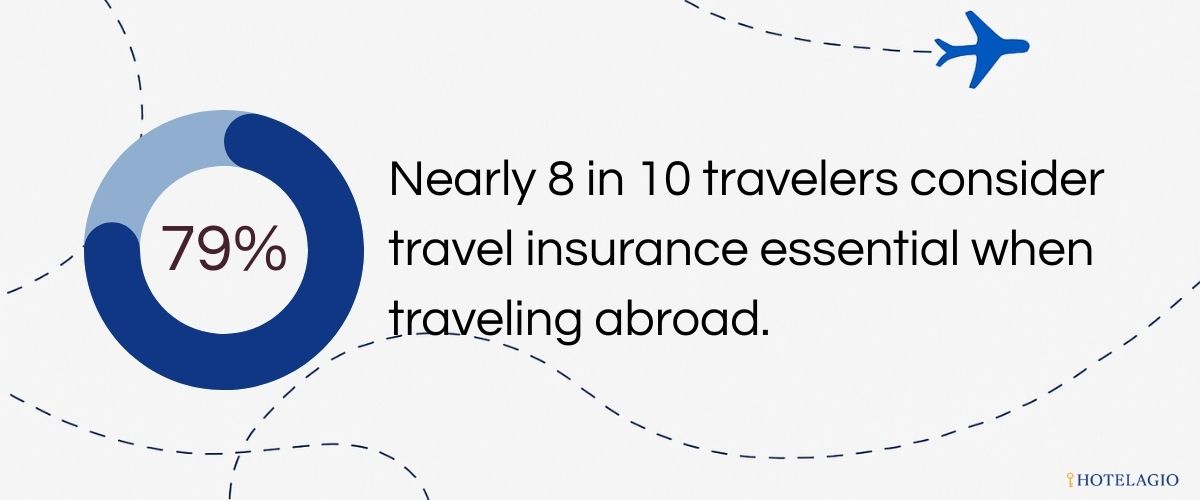
Surveys in 2025 show that nearly 80 percent of travelers consider travel insurance essential for international trips, while about 58 percent purchase it regularly.
The market continues to expand, with global travel insurance spending projected to surpass $40 billion USD by 2027, driven largely by younger travelers, frequent flyers, and long-haul destinations.
Key Travel Insurance Stats
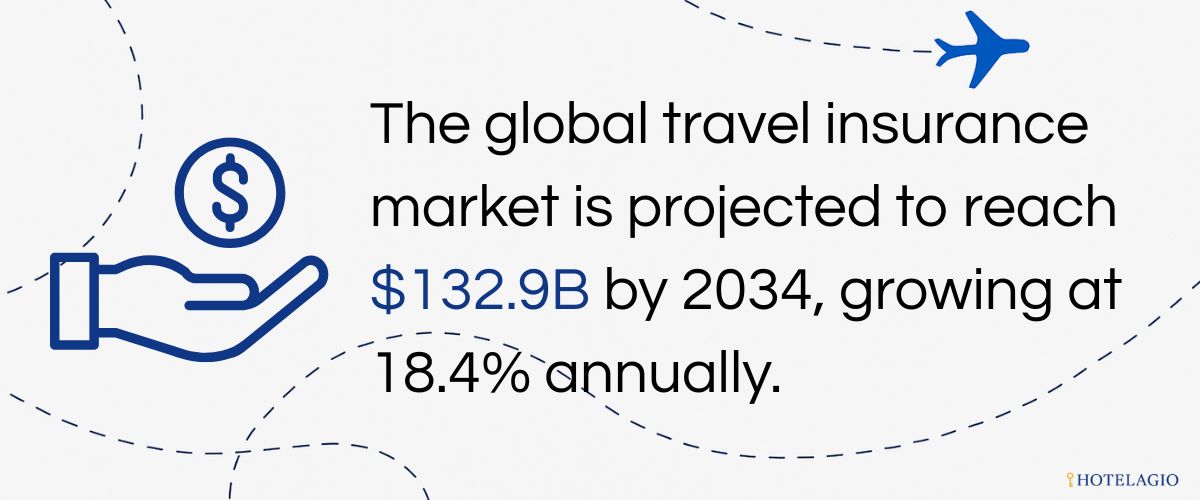
- The global travel insurance market was worth about 23.8 billion dollars in 2024 and is forecast to jump to 132.9 billion dollars by 2034, with an expected 18.4 percent yearly growth rate.
- US travelers spent around 5.56 billion dollars on travel insurance in 2024, up 46 percent from 3.81 billion dollars in 2019, showing how much more common trip protection has become since the pandemic.
- In 2022, about 77 million people were covered by more than 49 million travel protection plans sold by US Travel Insurance Association members across different channels, from travel agents to online aggregators.
- One large survey found that 42 percent of travelers bought travel insurance for their last trip, and most said it was worth the price, especially when they were reimbursed for canceled trips, lost luggage, or injuries on vacation.
- Another nationwide poll reports that 58.6 percent of US travelers have purchased travel insurance at least once, yet over 63 percent say they are skipping it for trips planned in 2025, leaving many expensive holidays unprotected.
- A separate study suggests only 38 percent of travelers currently choose to buy travel insurance at all, even though there were more than 3 million flight delays in 2024, which makes trip disruption a very real risk.
- Among people who do not buy cover, 35 percent say it is because they have never needed it before, which shows how strongly past experience and optimism bias shape their view of travel risk.
- In the UK, medical expenses are now the top reason for travel insurance claims, accounting for 34 percent of all claims in 2024. Insurers paid around 262 million pounds in medical bills, with an average payout of 1,528 pounds per claim.
- A survey of younger holidaymakers found that two thirds of Gen Z and Millennial travelers fly without any travel insurance, even though 29 percent of all travelers have already had to file a claim, with an average claim size close to 4,500 pounds.
- At the same time, another study shows that younger travelers are actually more likely to have bought travel insurance at least once. About 62 percent of Millennials and 58 percent of Gen Z say they have purchased cover for a trip.
- Looking ahead, 59 percent of surveyed travelers say they are likely to buy travel insurance for their next trip, and another 21 percent say they are more likely to buy it now than they were before, which suggests demand is still rising.
- By region, Europe currently holds about 38 percent of the global travel insurance market, while Asia Pacific is expected to be the fastest growing region, with a projected annual growth rate of around 16 to 17 percent through the next decade.
- One long term forecast expects the global travel insurance market to grow from about 27 billion dollars in 2025 to nearly 99 billion dollars by 2034, underlining how central trip protection, medical coverage, and disruption benefits are becoming to modern travel.
How Many Travelers Buy Travel Insurance?
Approximately 58 percent of global travelers now purchase travel insurance, though adoption varies significantly by region and type of trip.
Key adoption statistics:
- 79 percent of travelers say insurance is important for international travel.
- 41 percent purchase insurance for domestic trips.
- 67 percent of insured travelers buy coverage for medical emergencies.
- 52 percent buy it for trip cancellations or interruptions.
- Younger travelers (ages 25–40) show the fastest growth in adoption, especially when booking online.
Demand for coverage has risen substantially since 2020, as travelers increasingly perceive insurance as a standard part of trip planning.
How Much Do Travelers Spend on Travel Insurance?
Spending on travel insurance continues to rise as policies expand and trip costs increase.
- Average travel insurance premium: 4 to 10 percent of total trip cost.
- Average premium per insured trip: $220–$320 USD (international).
- Medical-only policies average $40–$70 USD for short-haul travel.
- Comprehensive policies with cancellation protection are the fastest-growing category.
- High-risk destinations and long-duration trips significantly increase premium costs.
The willingness to pay for more robust coverage reflects broader shifts in traveler expectations and global risk awareness.
What Types of Travel Insurance Are Most Popular?
Coverage preferences show clear patterns, with medical protection and trip cancellation leading demand.
| Coverage Type | Share of Purchases (2024–2025) | Notes |
|---|---|---|
| Emergency medical coverage | 67% | Highest demand category |
| Trip cancellation/interruption | 52% | Driven by rising trip costs |
| Baggage loss/theft | 43% | Common add-on |
| Travel delay compensation | 38% | More relevant due to flight disruption |
| Adventure activity coverage | 21% | Growing among younger demographics |
| Cancel for Any Reason (CFAR) | 12% | Premium product with rising adoption |
Comprehensive policies bundling multiple coverage areas are increasingly preferred over single-risk policies.
Which Travelers Are Most Likely to Purchase Travel Insurance?
Demographics and travel styles strongly influence insurance uptake.
| Group | Likelihood of Insurance Purchase | Notes |
|---|---|---|
| Travelers 55+ | Very high (70%+) | Health-focused and risk-averse |
| Business travelers | High (65%+) | Often employer-required |
| Adventure travelers | Moderate–high (55%) | Driven by activity risk |
| Families with children | High (60%+) | Medical protection priority |
| Budget travelers | Lower (35–40%) | Price sensitivity limits adoption |
| Long-haul travelers | Very high (75%+) | Higher trip value and risk |
Older travelers still represent the highest adoption rate, while growth is strongest among travelers under 40 purchasing policies online.
What Are the Most Common Travel Insurance Claims?
Medical emergencies, delays, and lost baggage make up the majority of claims.
| Claim Type | Share of Total Claims | Notes |
|---|---|---|
| Medical emergencies | 33% | Most expensive category |
| Trip cancellations | 28% | Costliest non-medical category |
| Travel delays | 19% | Increasing due to aviation disruptions |
| Lost or delayed baggage | 14% | Common across airports |
| Travel accidents/evacuations | 3–4% | Low volume but high cost |
Airline delays and extreme weather have caused significant increases in claims across all regions.
How Has Travel Insurance Changed Since the Pandemic?
The pandemic reshaped both product design and traveler expectations.
Key industry changes include:
- Increased availability of epidemic/pandemic coverage.
- Higher demand for cancellation flexibility.
- Integration of telemedicine and digital claims tools.
- Real-time assistance and app-based support becoming standard.
- Rise of embedded insurance at checkout on airline and hotel websites.
- Growth of “Cancel for Any Reason” policies.
Travelers now expect clearer coverage and easier digital management of policies.
What Are the Biggest Challenges Facing Travel Insurance?
Despite strong growth, several issues limit adoption and trust.
Current challenges include:
- Confusion about policy limitations; 45 percent of travelers do not fully understand their coverage.
- Rising premiums linked to global inflation and increased claims.
- Coverage exclusions for adventure sports or pre-existing medical conditions.
- Slow claims processing with some providers.
- Misconceptions that travel insurance is unnecessary for healthy or experienced travelers.
Clear communication and transparent policies remain critical to industry progress.
Travel Insurance Market Overview
Industry data shows robust global expansion.
Highlights:
- Global market value exceeded $22 billion USD in 2023, projected to reach $40 billion USD by 2027.
- Digital insurance purchases now represent 55–60 percent of total sales.
- Europe and North America represent over 60 percent of global market revenue.
- Asia-Pacific is the fastest-growing region, driven by outbound Chinese, Indian, and Southeast Asian travelers.
- Embedded travel insurance (built into booking platforms) is projected to exceed 70 percent of purchases by 2030.
Expert Insights
Megan Cruz — Executive Director, U.S. Travel Insurance Association
“Travelers today see insurance not just as a safety net but as an essential part of responsible trip planning. Awareness and adoption have never been higher.”
Adam Knights — Regional Managing Director, UK & Ireland, ATPI
“Uncertainty in global travel has made risk management a priority. Companies and individuals are increasingly investing in comprehensive travel protection.”
Sarah Green — Senior Analyst, Global Insurance Observatory
“Digital platforms are reshaping the travel insurance landscape. Consumers expect instant quotes, seamless claims, and complete transparency.”
Michael McGavock — Partner, Travel Risk Advisory Group
“The biggest challenge is still education. Many travelers do not understand what their policies cover, which leads to disappointment and mistrust.”
FAQ – Travel Insurance Insights
How many travelers buy travel insurance?
Around 58 percent of travelers now purchase travel insurance, with higher adoption for international and long-haul trips.
What type of travel insurance is most commonly purchased?
Emergency medical coverage is the top category, followed by trip cancellation protection.
How much does travel insurance cost?
Most travelers spend between 4 and 10 percent of their total trip cost on insurance.
Which travelers are most likely to buy travel insurance?
Older travelers, families, business travelers, and long-haul travelers show the highest adoption rates.
Why has travel insurance become more popular?
Increased travel disruptions, rising medical costs, and greater risk awareness have significantly boosted demand
Sources
- U.S. Travel Insurance Association — Industry reports on travel insurance adoption and spending
- Allianz Global Assistance — Annual travel insurance statistics and market trends
- World Travel & Tourism Council — Research on global travel risks and traveler sentiment
- InsureMyTrip Consumer Study — Analysis of claims, coverage demand, and consumer behavior
- McKinsey & Company — Market forecasts for global travel insurance growth

0 Comment