


Sustainable travel has rapidly shifted from a niche trend to a mainstream expectation.
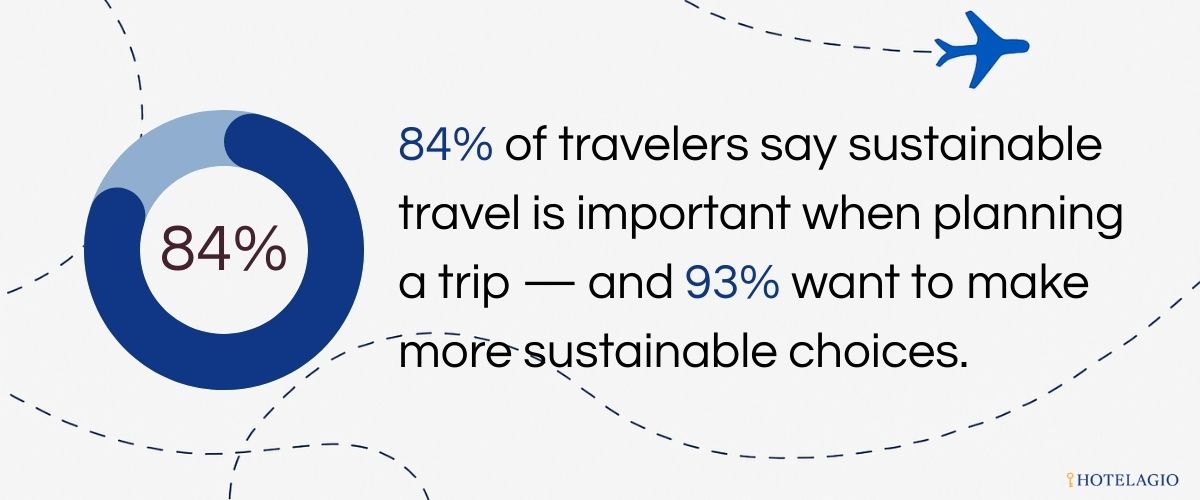
Recent global surveys show that 84 percent of travelers consider sustainability important when planning a trip, and 93 percent report wanting to make more sustainable choices.
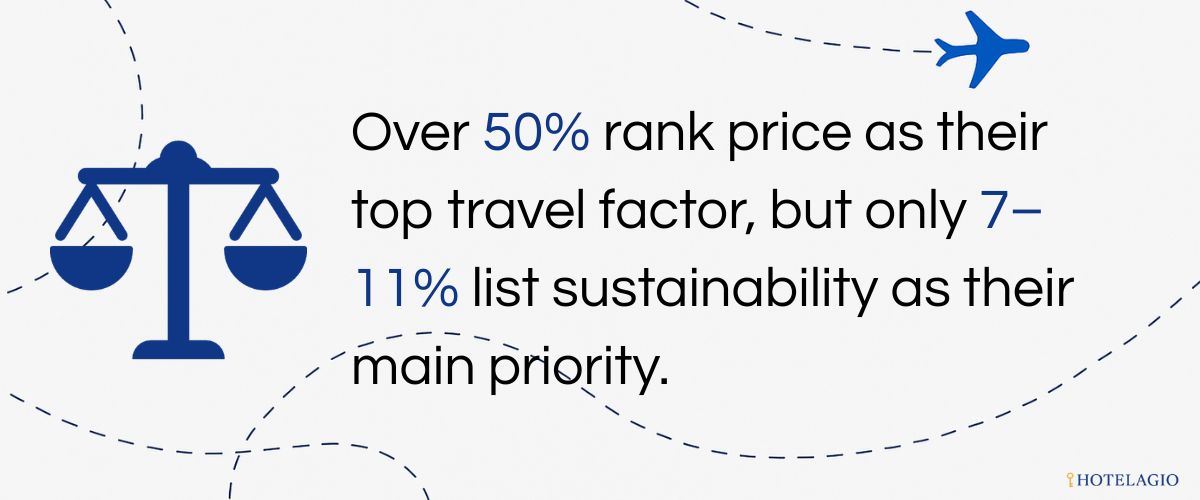
Yet the gap between intention and action remains substantial: more than 50 percent of travelers still rank price as the most important factor, while only 7 to 11 percent list sustainability as their top priority.
Even so, momentum continues to build.
Nearly half of all travelers (43–50 percent) say they are willing to pay more for eco-friendly or certified sustainable options, though most are comfortable with only a modest premium of 5 to 10 percent.
Key Sustainable Travel Stats
- Around 84% of global travelers say that traveling more sustainably is important when they plan a trip, and about 93% say they want to make more sustainable choices and have already done so to some extent.
- Across multiple major surveys, roughly three in four travelers describe sustainable travel as important, confirming that this is no longer a niche concern but a mainstream expectation.
- In practice, cost still beats sustainability. More than 50% of consumers say price is the main factor in travel decisions, while only about 7 to 11% rank sustainability as their top priority.
- When it comes to paying more, about 43 to 50% of travelers say they are willing to pay a premium for eco friendly or certified sustainable options, but most are comfortable only with a 5 to 10 percent price increase.
- One Euromonitor study reports that nearly 80% of travelers are prepared to pay at least 10 percent more for sustainable travel features, especially in adventure and eco tourism.
- Tourism has a sizable climate impact. Recent research estimates that global tourism is responsible for around 8 to 9 percent of total greenhouse gas emissions, with its carbon footprint rising to about 5.2 gigatons of CO2 equivalent in 2019 and growing roughly 3.5 percent per year, faster than the global average.
- Looking ahead, transport related tourism emissions alone are expected to grow by about 21 percent from 2016 to 2030, if the sector continues on its current path.
- On the behavior side, about 75% of travelers say they plan to travel more sustainably in the next year, and 57% want to reduce their energy use while on the road.
- There is still a clear intention action gap. One compilation of Booking.com data highlights that while 87% of travelers say they want to travel sustainably, only 39% regularly make environmentally friendly choices when they actually travel.
- Almost half of travelers, about 49%, feel that sustainable options are too expensive, even though 43% say they would pay extra for travel options with a trusted sustainability certification.
- Interest in sustainable accommodation has surged over the past decade. The share of travelers who want to stay in a sustainable property has risen from about 62% in 2016 to around 81% in recent surveys.
How Many Travelers Prioritize Sustainable Tourism?
A growing majority of travelers recognize sustainability as a crucial part of the tourism experience.
According to 2024–2025 survey data from major travel platforms and international organizations, approximately 70 percent of global travelers express a desire to make more sustainable choices, though only about 40 percent consistently act on them.
Key figures include:
- 76 percent of global travelers say they want to travel more sustainably in the next 12 months.
- 43 percent regularly choose eco-friendly accommodations.
- 32 percent actively seek destinations with environmental certifications or responsible tourism programs.
- 65 percent say witnessing climate change effects influences their travel decisions.
Sustainable intention is high, but intention-action gaps remain at the center of industry challenges.
How Much Do Travelers Spend on Sustainable Tourism?
Sustainable travel has become an important revenue driver.
Consumers are willing to pay more for eco-friendly options, though willingness varies significantly across markets.
- Travelers would spend up to 12–20 percent more for accommodations and activities labeled environmentally responsible.
- Eco-certified hotels report up to 28 percent higher booking rates compared to non-certified competitors.
- Adventure and nature-based tourism has grown to represent roughly 20 percent of the global tourism economy, generating an estimated 260–300 billion USD annually.
- Destinations with sustainability programs report higher guest satisfaction scores and improved repeat-visitor rates.
Demand is growing, and financially supporting sustainability is becoming normalized across segments.
Which Markets Care Most About Sustainable Travel?
While sustainability is a global trend, interest is strongest in specific regions and demographics.
| Region | Sustainability Engagement (2024–25) | Notes |
|---|---|---|
| Northern Europe | 75–82% | Highest adoption; strong cultural emphasis |
| Western Europe | 70–76% | High support for certified accommodations |
| North America | 55–62% | Strong awareness but weaker policy adoption |
| Asia-Pacific | 62–70% | Major growth among younger travelers |
| Latin America | 65–72% | Increasing interest tied to environmental concerns |
| Middle East | 50–57% | Improvements driven by national vision plans |
Younger demographics, especially travelers aged 18–35, consistently show the highest willingness to adapt their travel behavior to sustainability standards.
What Sustainable Behaviors Are Travelers Adopting?
Sustainable travel behavior varies from simple preference shifts to major lifestyle decisions.
Common actions include:
- Choosing transportation with lower emissions, especially trains over short-haul flights.
- Staying in eco-certified hotels or accommodations with renewable energy systems.
- Reducing single-use plastics during travel; 70 percent say they actively try to avoid them.
- Participating in community-based tourism experiences.
- Selecting destinations that regulate visitor numbers or implement environmental protections.
- Reducing travel frequency but extending length of stay (slow-travel habits).
Behavior is evolving toward long-term environmental and social awareness.
What Are the Most Sustainable Destinations?
Various global rankings highlight destinations with strong environmental policies, community protection, and well-managed visitor infrastructure.
| Destination | Recognition | Notes |
|---|---|---|
| Slovenia | Top of multiple sustainable rankings | Green certification programs |
| Costa Rica | Global eco-tourism leader | Over 25% of territory protected |
| New Zealand | Strong conservation focus | Visitor fee programs |
| Iceland | Renewable energy leadership | Controlled access to natural sites |
| The Netherlands | Urban mobility innovation | Cycling & low-emissions transport |
| Bhutan | High-value, low-volume tourism | Strict environmental policies |
| Finland | Carbon-neutral goals | Nature-focused cultural tourism |
| Denmark | World-class city sustainability | Green mobility & circular systems |
| Switzerland | Protected landscapes | Strong regulatory framework |
| Estonia | Digital and low-impact tourism | National eco-innovation |
These destinations have become case studies in sustainable development and tourism capacity management.
What Are the Biggest Challenges Facing Sustainable Travel?
Despite growing interest, sustainability in tourism faces several systemic challenges.
Current barriers include:
- High cost of sustainable options compared to conventional alternatives.
- Limited availability of eco-certified accommodations in many destinations.
- Lack of standardized global sustainability criteria.
- Greenwashing concerns: 40–50 percent of travelers say they doubt the credibility of sustainability claims.
- Airline emissions remain the largest unresolved issue; aviation accounts for 2–3 percent of global CO₂ emissions.
- Infrastructure overload in popular destinations creates ecological strain and disrupts communities.
- Travelers want sustainability, but convenience often outweighs responsibility in decision-making.
Sustainability and Accommodation Trends
Hotels and hospitality providers play a growing role in sustainable transition.
Key metrics from 2024–2025:
- Approximately 30 percent of global hotels now implement at least one significant sustainability practice.
- 22 percent use renewable energy sources such as solar, geothermal, or wind power.
- Water reduction systems are increasing, especially in drought-sensitive destinations.
- Waste reduction programs continue to expand, with composting and recycling services becoming standard in urban hotels.
- Eco-certified properties benefit from higher occupancy and stronger guest loyalty metrics.
Hospitality is one of the fastest-evolving sectors within sustainable tourism.
Expert Insights
These expert perspectives highlight the urgency and opportunities in sustainable tourism.
Jeremy Sampson — CEO, The Travel Foundation
“Tourism needs to shift from being extractive to regenerative. The future depends on redesigning systems that give back more than they take.”
Zoritsa Urosevic — Executive Director, UN Tourism
“Sustainability is no longer optional. It is the central pillar of the future of tourism and requires collaboration between businesses, governments, and travelers.”
Megan Epler Wood — Director, Sustainable Tourism Asset Management Program (STAMPS)
“Destinations must evaluate the real cost of tourism to local ecosystems and communities. Data-driven management is essential for long-term viability.”
Harold Goodwin — Founder, Responsible Tourism Partnership
“Responsible tourism is about making better places for people to live in and better places for people to visit. These goals must remain inseparable.”
FAQ — Sustainable Travel Insights
How many travelers prefer sustainable tourism today?
Around 70 percent of global travelers say they want to travel more sustainably, though fewer consistently act on this intention.
Why is sustainable travel growing?
Environmental concerns, climate change awareness, and rising demand for authentic experiences all contribute to the growth of sustainable travel.
Which regions lead sustainable tourism adoption?
Northern and Western Europe currently lead adoption rates, with Asia-Pacific showing rapid growth.
Are travelers willing to pay more for sustainable options?
Most travelers indicate they would pay 12–20 percent more for environmentally responsible accommodations and experiences.
What challenges prevent sustainable travel growth?
Higher costs, limited availability, inconsistent standards, and concerns about greenwashing remain major barriers.
Sources
- UN Tourism — Reports on global tourism sustainability progress and challenges
- Booking.com Sustainable Travel Report — Traveler sentiment surveys on sustainability (2024–2025)
- The Travel Foundation — Research on regenerative tourism models
- Sustainable Hospitality Alliance — Data on hotel sustainability adoption worldwide
- McKinsey & Company — Studies on traveler behavior, emissions, and tourism economics

0 Comment