


Screen time has become one of the defining behavioral markers of modern life.
In 2025, global research shows that the average adult spends between 6.5 and 7.5 hours per day in front of screens, while younger demographics exceed 9 hours daily.
Smartphone usage alone accounts for nearly 4 hours per person per day, with social media representing one-third of that time.
Despite growing awareness of digital fatigue, dependence on screens for work, communication, entertainment, and education continues to rise.
These statistics illustrate a world deeply shaped by digital consumption, raising questions about well-being, productivity, and long-term habits.
Key Screen Time Stats
- Globally, the average person now spends about 6 hours and 38 minutes per day on internet-connected screens.
- In the United States, the daily screen-time average is slightly higher, around 6 hours and 40 minutes per day.
- Up to 41 % of American teenagers (ages 13–18) report using screens more than 8 hours per day.
- For many adults worldwide, screen time translates into roughly 47 hours per week — that’s almost a full work-week spent staring at screens.
- More than half of daily screen time for many users is spent on mobile devices, making smartphones the dominant screen medium in 2025.
- A significant share of screen time among youngsters stems from social media, with many users spending 2–3 hours per day on social apps alone.
- Among children 8 and under, average daily screen exposure remains lower, around 2.5 hours per day, though ownership of tablets or phones among toddlers rises.
- Recent research links high non-school screen use in teenagers with increased likelihood of sleep problems, anxiety or depressive symptoms, and lower physical activity.
How Much Screen Time Do People Accumulate Each Day?
Screen time has steadily increased across all age groups, driven by mobile adoption, remote work, and streaming culture.
Key figures (global averages, 2024–2025):
- Adults: 6.5–7.5 hours/day
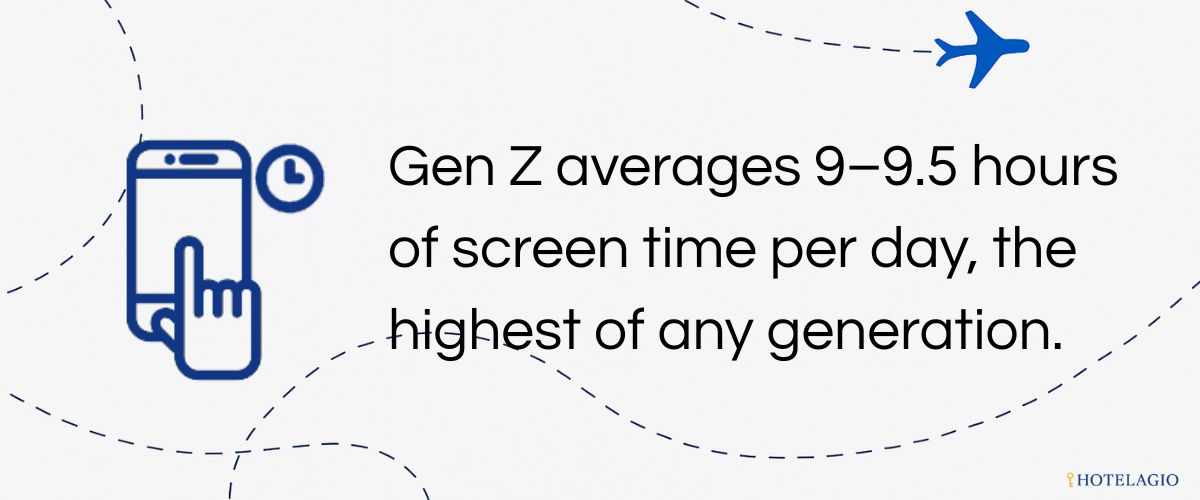
- Gen Z: 9.0–9.5 hours/day
- Millennials: 7.0–7.5 hours/day
- Children (8–12): 4–5 hours/day
- Teens (13–17): 7–8 hours/day
Remote and hybrid work models contribute significantly to adult increases, while entertainment and social platforms dominate youth usage.
How Much Time Do People Spend on Mobile Devices?
Mobile screens continue to dominate global attention spans.
- Average mobile screen time: 3.8–4.5 hours/day
- Heavy users exceed 6–7 hours/day
- 90 percent of mobile time is spent in apps rather than browsers
- Video content (TikTok, YouTube, Instagram) accounts for more than half of mobile consumption
- 65 percent of users check their phones within 10 minutes of waking up
- 30 percent say they feel anxious when separated from their devices
Mobile continues to shape digital behavior more than any other technology.
Which Countries Have the Highest Screen Time?
Screen time varies significantly between regions, often reflecting cultural, economic, and technological differences.
| Country | Average Daily Screen Time (2024–2025) | Notes |
|---|---|---|
| Philippines | 9.2 hours | Highest global usage |
| Brazil | 8.6 hours | High social media adoption |
| South Africa | 8.3 hours | Fast-growing mobile market |
| Argentina | 7.8 hours | Strong streaming culture |
| United States | 7.3 hours | High smartphone penetration |
| United Kingdom | 6.9 hours | Balanced across devices |
| Germany | 5.8 hours | Lower social media usage |
| France | 5.6 hours | Declines among younger users |
Countries with lower average screen time tend to have stronger work-life separation norms or lower reliance on social platforms.
What Types of Screens Consume the Most Time?
Different screens dominate at different times of day and for different tasks.
Key patterns:
- Smartphones: 50–60 percent of total digital time
- Computers (laptops/desktops): 25–30 percent, mostly work-related
- TV and streaming devices: 10–20 percent
- Tablets: 5–10 percent, especially common among children
Work drives computer screen time, while entertainment drives smartphone and TV usage.
How Much Time Do People Spend on Social Media?
Social platforms remain one of the largest drivers of global screen time.
- Global average: 2.25 hours/day on social media
- Gen Z: 3.5 hours/day
- Top platforms by usage time: TikTok, YouTube, Instagram, Facebook
- 80 percent of social media time is consumed on mobile
- Short-form video content is the fastest-growing driver of daily screen consumption
Social platforms are increasingly engineered to maximize continuous engagement, extending daily screen time across all demographics.
How Screen Time Affects Children and Teens
Screen usage is rising fastest among youth, though concerns about mental and physical health remain strong.
Research highlights:
- Children aged 8–12 average 4–5 hours/day, mostly video content and gaming
- Teens spend 7–8 hours/day on screens outside school hours
- About 46 percent of teens feel they spend too much time on their phones
- Increased screen usage correlates with sleep disruption, decreased attention, and higher anxiety
- Parental controls and screen-time limits are becoming more widely adopted, though inconsistently enforced
Concern for youth digital well-being is driving policy changes in many countries.
Health and Productivity Impacts of Screen Time
High screen time is associated with multiple physical and cognitive effects.
Common outcomes include:
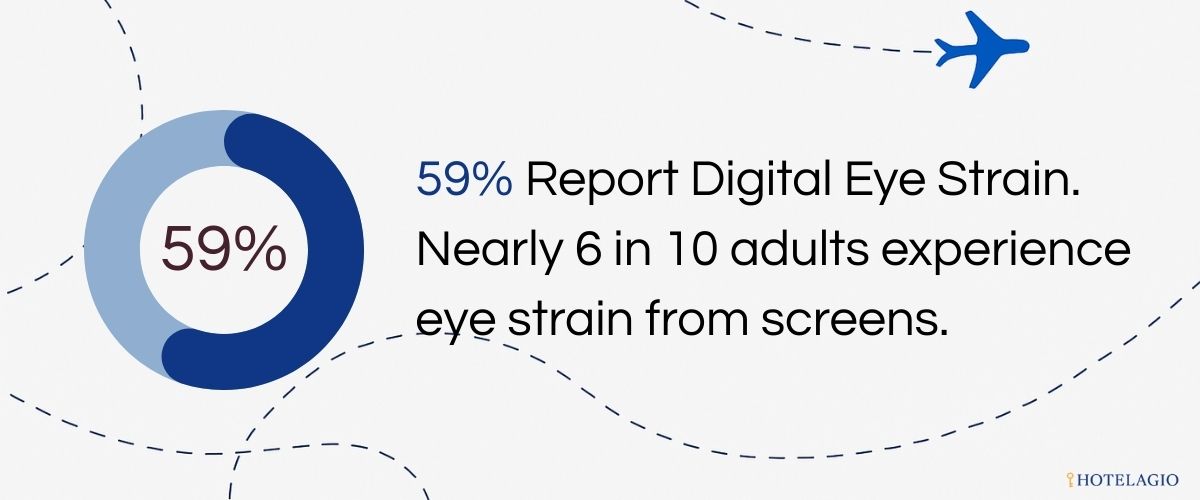
- Eye strain and digital fatigue (59 percent of adults report symptoms)
- Reduced sleep quality due to evening screen use
- Increased sedentary behavior and related health risks
- Reduced attention span and focus variability
- Increased anxiety and overstimulation in frequent social media users
At work, excessive screen time is linked to burnout, decreased productivity, and lower long-term engagement.
How Is Screen Time Changing Across Industries?
Screen usage differs by sector, especially in professional settings.
- Remote tech and creative industries report 8–10 hours/day on work screens
- Education sectors show a rise in digital learning tools, averaging 5–6 hours/day for students
- Healthcare workers are seeing increases due to electronic record systems
- Retail and service workers show minimal increases, staying under 3 hours/day
Hybrid work models remain the most significant structural driver of high daily screen time.
How Much Screen Time Is Spent Searching for Hotels or Vacations?
Screen time dedicated to travel planning has grown significantly as travelers rely more on mobile apps, search engines, and booking platforms for decision-making. Across global studies, consumers now spend between 2 and 6 hours researching a single trip, with most of that time occurring on smartphones.
Key insights:
- Travelers typically make 20 to 30 online visits to travel websites before booking a vacation.
- About 70 percent of leisure travelers begin their planning on a mobile device, even if they complete the booking on a desktop.
- Searching for hotels accounts for roughly 35 to 45 percent of total trip-planning screen time, with price comparison pages being the most frequently visited.
- Younger travelers (18–34) spend the most time browsing destinations and hotels, averaging 5+ hours of research per trip.
- Video content influences planning heavily: nearly 50 percent of Gen Z and millennials rely on short-form videos to discover hotels, activities, or places to stay.
- More than 80 percent of travelers say online reviews significantly impact their accommodation choices, contributing to frequent, repeated browsing sessions.
Expert Insights
Jean Twenge, Psychologist and Author
“The rise in screen time among young people is unprecedented. We are witnessing a generational shift in how attention, social relationships, and emotional development are shaped.”
Adam Alter, Professor of Marketing and Psychology, NYU Stern
“Screens are engineered to be engaging, and our attentional systems have not evolved to resist such sophisticated design. Managing screen time is becoming a public health challenge.”
Cal Newport, Author and Computer Science Professor
“Digital overload reduces our ability to perform deep, meaningful work. Without boundaries, screen time expands to fill every available moment.”
FAQ – Screen Time Insights
How much screen time is healthy?
Most health organizations recommend limiting recreational screen time to under two hours per day, though this is rarely achieved in practice.
Which age group has the highest screen time?
Gen Z consistently reports the highest screen usage, averaging around nine hours per day across all devices.
Is mobile the main source of screen time?
Yes. Smartphones account for more than half of total daily screen usage worldwide.
Why is screen time increasing?
The rise of mobile apps, social media, streaming, remote work, and digital education all contribute to long-term growth.
Does high screen time affect mental health?
Studies link heavy screen use to increased anxiety, attention difficulties, and reduced sleep quality, especially in younger demographics.
Sources
- DataReportal / Kepios — Global digital and screen time statistics (2024–2025)
- Pew Research Center — Studies on device usage among teens and adults
- Common Sense Media — Screen time and youth behavior reports
- Ofcom — Annual Media Nations report (UK screen time trends)
- Global Web Index (GWI) — Consumer digital behavior and screen time tracking

0 Comment