

Myrtle Beach, South Carolina, remains one of the most visited coastal destinations in the United States, known for its long Atlantic shoreline, family-friendly attractions, golf courses, and large resort infrastructure.
The greater Myrtle Beach area, including the Grand Strand’s 60-mile coastline, welcomes around 20 million visitors per year, making it one of the top leisure tourism markets in the Southeast.
Tourism continues to drive record levels of visitor spending, hotel revenue, and economic impact across Horry County, while trends such as seasonal crowding, new development, and changing traveler behavior reshape the region’s long-term outlook.
Key stats: Myrtle Beach Tourism
- 18.2 million visitors in 2024 – The Grand Strand drew a record crowd, with nearly two-thirds coming back for return trips.
- US $13.2 billion in visitor spending – That’s a 5.3% increase over 2023 and shows the beach destination’s strong appeal.
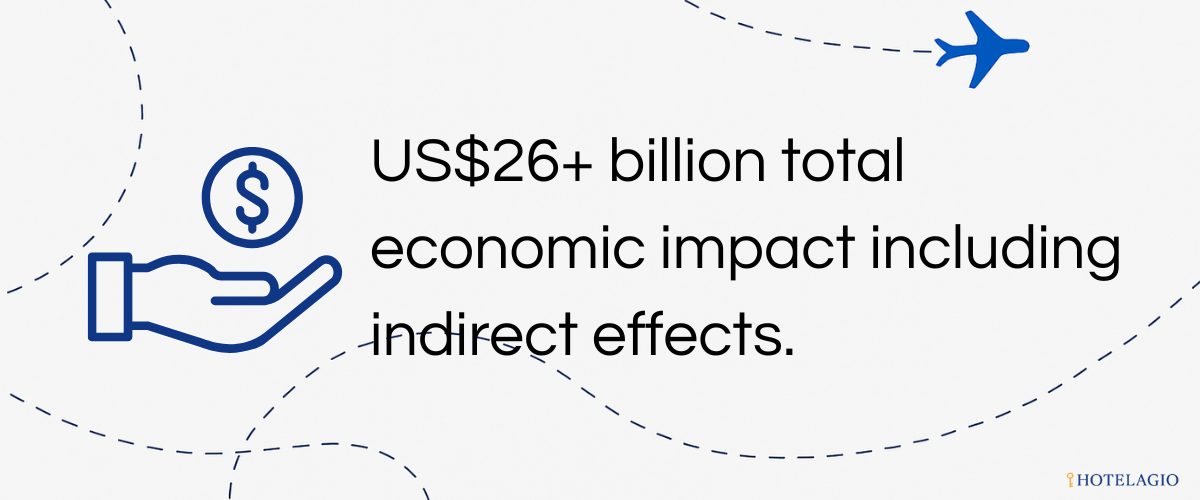
- US $26 billion+ total economic impact – When counting indirect effects like supply chains and local wages, tourism is a major economic engine.
- Approximately 82,000 jobs supported by tourism – From hotels and restaurants to retail and services, the industry sustains a large local workforce.
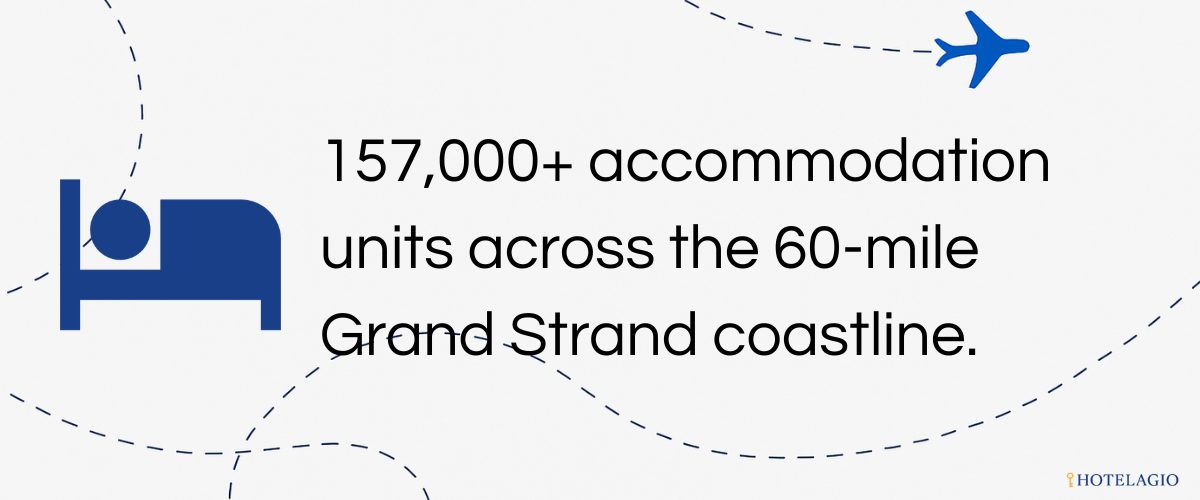
- 157,000+ accommodation units – With rooms, resorts and condos across 14 communities, the region is geared for heavy visitor volumes.
- US $143 in visitor spending generated for every US $1 in marketing – A testament to effective destination promotion by Visit Myrtle Beach.
- US $59 million collected via hospitality fees in 2024 – A key funding stream for local services and infrastructure.
- Holiday-peak hotel occupancy at ~81.2% – Reflects strong demand during major travel periods.
- Tourism supports nearly half the area’s jobs – With 49% of the local labour force working in tourism-related fields.
- Visitors supply about 66% of local sales tax revenue – Showing that tourism doesn’t just fill beds, it fills cash registers.
How Many Tourists Visit Myrtle Beach Each Year?
The Myrtle Beach region receives roughly 20 million annual visitors, a number that has remained stable or slightly growing in recent years according to local tourism agencies and economic reports.
Visitor volume estimates typically include overnight visitors, day travelers, and seasonal residents who significantly increase population density during peak months. Horry County remains one of the fastest-growing tourism counties in the United States.
How Much Do Tourists Spend in Myrtle Beach?
Visitor spending exceeds $12 billion annually, reflecting the scale of hotels, restaurants, attractions, golf, entertainment, and shopping in the region.
Tourism contributes roughly one-half of the regional economy, making Myrtle Beach far more tourism-dependent than most U.S. coastal destinations. Accommodation revenue, dining, recreation, and retail represent the largest share of visitor expenditures.
Which States Send the Most Visitors to Myrtle Beach?
Myrtle Beach is primarily a domestic tourism market, with the largest share of travelers arriving by car from nearby states.
| State | Estimated Share of Visitors | Notes |
|---|---|---|
| North Carolina | ~20% | Strong proximity market |
| South Carolina | ~17% | In-state leisure travelers |
| Virginia | ~13% | High drive-market volume |
| Ohio | ~8% | Midwest feeder state |
| Pennsylvania | ~7% | East Coast road-trip market |
| New York | ~5% | Growing long-distance market |
| Georgia | ~5% | Regional weekend segment |
| West Virginia | ~4% | Drive-in leisure |
| Tennessee | ~4% | Expanding family-travel segment |
| Other U.S. states | ~17% | Includes Midwest and Northeast |
The majority of visitors arrive by car, and Myrtle Beach remains one of the most accessible beach vacation markets on the East Coast.
When Is the Best Time to Visit Myrtle Beach?
Myrtle Beach is highly seasonal, with peak travel between June and August, a strong spring season from late March through May, and steadier but lighter traffic during fall and winter.
| Month | Visitor Trend | Notes |
|---|---|---|
| March | Rising | Start of spring tourism |
| April | High | Spring break and golf traffic |
| May | High | Pre-summer surge |
| June | Very high | Start of peak season |
| July | Highest | Crowded beaches and max occupancy |
| August | Very high | Late summer demand |
| September | Moderate | Warm weather, fewer crowds |
| October | Moderate | Festivals and golf events |
| Winter | Low | Lowest occupancy of the year |
What Are Myrtle Beach’s Most Visited Attractions?
Myrtle Beach offers entertainment-driven tourism with a mix of beaches, shows, amusement areas, and outdoor activities.
| Attraction | Notes |
|---|---|
| Myrtle Beach Boardwalk & Promenade | One of the busiest areas; major foot traffic |
| Broadway at the Beach | Large retail and entertainment complex |
| SkyWheel Myrtle Beach | Landmark observation wheel |
| Myrtle Beach State Park & Huntington Beach State Park | Popular nature and beach areas |
| Barefoot Landing | Shopping and dining village |
| The Carolina Opry | Long-running music and theater show |
| Ripley’s Aquarium | Major family attraction at Broadway |
| Family Kingdom Amusement Park | Historic seaside amusement park |
| Myrtle Beach Pier system | High visitor volume |
| Over 80 golf courses | One of the largest golf tourism markets in the U.S. |
Hotels Snapshot
The Myrtle Beach hotel market remains one of the largest coastal lodging clusters in the U.S.
Key indicators:
- Occupancy: typically ranges from 80–90% in summer, much lower in winter
- ADR (Average Daily Rate): rising year-over-year, with summer rates significantly higher
- Room supply: thousands of hotel, condo-hotel, and vacation rental units along the Grand Strand
- Resort properties dominate oceanfront corridors, while inland hotels serve sports and business travel
The area sees strong revenue from condo-hotel units, timeshares, and large multi-tower resorts that cater primarily to family travel.
Key Challenges and Sustainability Factors
Myrtle Beach faces multiple structural challenges related to its size and tourism dependency.
Key issues include:
- High peak-season congestion along major corridors
- Environmental pressures on beaches, wildlife, and coastal wetlands
- Hurricane vulnerability and climate-related coastal erosion
- Continued development pressure along the oceanfront
- Affordable housing shortages for hospitality workers during peak season
Local strategies increasingly focus on sustainable growth, infrastructure modernization, beach renourishment, and diversification of the visitor economy.
FAQ – Myrtle Beach Tourism Insights
How many visitors does Myrtle Beach get each year?
The region welcomes around 20 million visitors annually, including overnight travelers and day visitors.
When is the busiest time to visit Myrtle Beach?
The peak season runs from June through August, when beaches and hotels reach their highest occupancy levels.
What type of tourists visit Myrtle Beach the most?
The majority are domestic drive-market visitors, especially from North Carolina, South Carolina, Virginia, and Ohio.
How important is tourism to Myrtle Beach’s economy?
Tourism represents roughly half of the regional economy, making it one of the most tourism-dependent areas in the Southeast.
Is Myrtle Beach affordable compared to other U.S. beach destinations?
Myrtle Beach is known for offering budget-friendly hotels, restaurants, and family entertainment, which keeps it competitive.
Sources
- Myrtle Beach Area Chamber of Commerce — Official Visitor Statistics & Economic Impact
- South Carolina Department of Parks, Recreation & Tourism — SC Tourism Research & Annual Reports
- Horry County Government — Economic Data & Community Indicators
- Myrtle Beach Online (The Sun News) — Local Reporting on Tourism and Development
- U.S. Travel Association — Travel Trends & Domestic Tourism Insights

0 Comment