

Luxury travel has grown into one of the most resilient and profitable segments of the global tourism industry.
In 2024–2025, high-income travelers demonstrated strong demand for exclusive experiences, personalized itineraries, and premium hospitality.
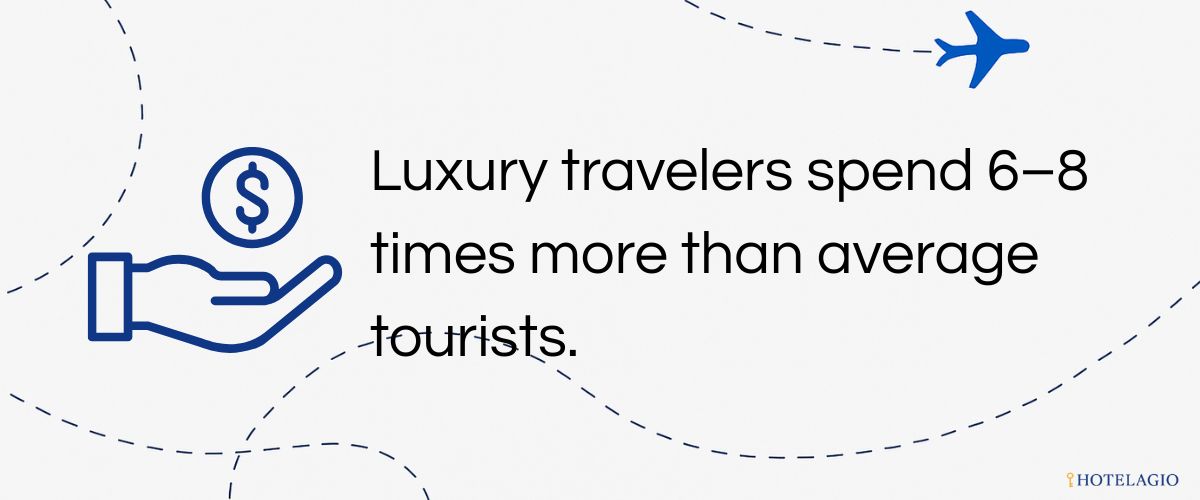
Recent reports show that luxury travelers spend at least six to eight times more than average tourists, with the global luxury travel market valued at more than $1.4 trillion and projected to rise steadily through 2030.
Demographic shifts, particularly the rise of affluent Millennials and Gen Z, are reshaping the traditional profile of luxury consumers, pushing the sector toward more experiential, wellness-oriented, and sustainable practices.
Key Luxury Traveler Demographics Stats
- The global luxury travel market was valued at USD 1.48 trillion in 2024. Projections put it to reach USD 2.36 trillion by 2030, suggesting sustained growth at ~8.2% annual rate.
- In 2024, Europe accounted for roughly 34% of global luxury-travel revenue, making it the largest regional share.
- Approximately 80% of luxury-travel spending comes from travelers under 60 years old, contrary to stereotypes about retirees dominating luxury travel.
- The age group around 40–50 years old is the largest cohort among luxury travelers, according to recent industry data.
- About 35% of the luxury-travel market is made up of people with a net worth between USD 100,000 and USD 1 million, so-called “aspiring luxury travelers.”
- Among affluent travelers, those at the very top, individuals with USD 5 million+ in assets (VHNWIs) or USD 30 million+ (UHNWIs), tend to prefer remote, private, low-profile experiences, often prioritizing privacy over big-name luxury brands or flashy settings.
- There is a clear shift: many luxury travelers now value authenticity and meaningful experiences over ostentatious displays. A large portion rejects generic “cookie-cutter” luxury — seeking instead local culture, uniqueness, and emotional resonance.
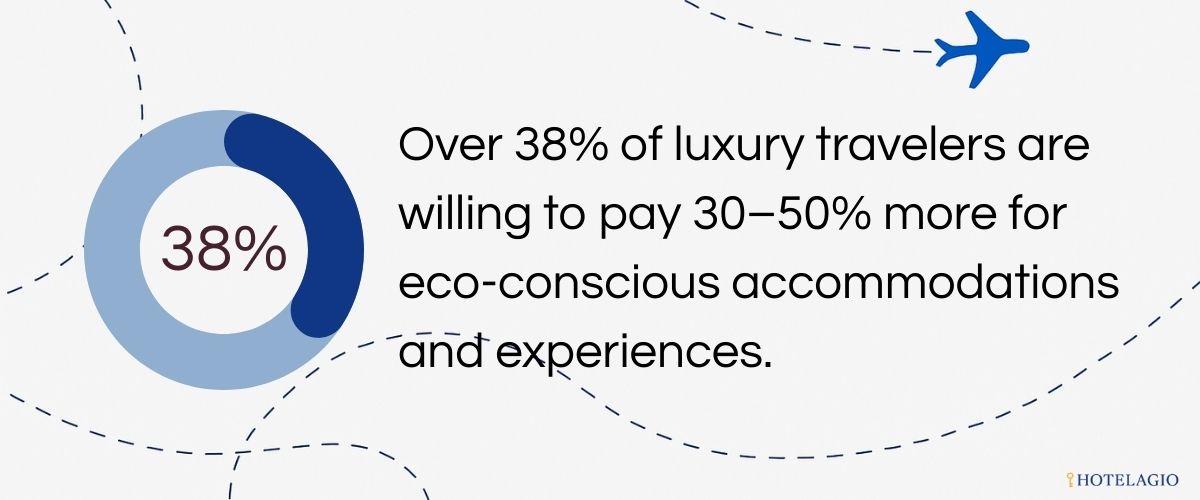
- Over 38% of luxury travelers report they are willing to pay 30–50% more for environmentally conscious or sustainable accommodations and services, a sign that eco- and value-driven luxury is on the rise.
How Large Is the Global Luxury Travel Market?
The global luxury tourism sector continues to grow faster than mainstream travel, supported by high-net-worth individuals and affluent middle-upper classes worldwide.
Key market indicators:
- The global luxury travel market surpassed $1.4 trillion in 2024 and is forecast to grow at an annual rate of 7–8 percent through 2030.
- Luxury travelers contribute to over 20 percent of total tourism revenue, despite making up a much smaller portion of overall travelers.
- Ultra-high-net-worth individuals (UHNWIs) take an average of 14–20 trips per year, including business and leisure.
- The wellness luxury segment grew by 14 percent YoY, reflecting a shift toward premium health-centered travel.
Luxury travel has become one of the most dynamic and diversified areas of global tourism.
What Are the Demographics of the Luxury Traveler?
Luxury travelers today come from a broader range of age groups and regions than ever before.
| Demographic Segment | Share of Luxury Travelers | Notes |
|---|---|---|
| Millennials (ages 27–42) | ~27% | Growing fastest; prioritize experiences over status |
| Gen X (ages 43–58) | ~33% | Strong purchasing power; family + lifestyle travel |
| Baby Boomers (ages 59–77) | ~31% | Highest spending per trip; prefer comfort and premium service |
| Gen Z (ages 18–26) | ~9% | Emerging market; tech-driven and sustainability-focused |
Additional demographic insights:
- Around 70 percent of luxury travelers hold a university degree or higher.
- Approximately 60 percent work in professional or executive roles.
- In 2024, 44 percent of global luxury travelers were female, reflecting increasing spending power and solo-travel trends.
Which Regions Produce the Most Luxury Travelers?
Luxury tourism is driven by both established and rapidly emerging markets.
| Region | Market Share (2024–25) | Notes |
|---|---|---|
| North America | ~32% | Largest outbound luxury market |
| Western Europe | ~27% | Strong preference for cultural and experiential travel |
| Asia-Pacific | ~28% | Fastest-growing segment, led by China, South Korea, Japan |
| Middle East | ~6% | High per-capita spending; rising demand for ultra-luxury |
| Latin America | ~4% | Growing interest among upper-middle-class consumers |
China remains the world’s largest potential luxury travel market, with affluent travelers taking more international trips as restrictions ease.
How Much Do Luxury Travelers Spend?
Luxury travelers spend significantly more per trip than standard leisure tourists.
Spending benchmarks:
- Average luxury traveler spend per trip: $5,000 to $15,000, depending on destination and experience level.
- Ultra-luxury trips often exceed $30,000 to $100,000, particularly involving yachting, safaris, private aviation, or bespoke itineraries.
- Luxury hotel stays average $450–$1,200 per night, with ultra-luxury properties exceeding $2,000 per night.
- Around 54 percent of luxury travelers increase spending on wellness, spa, and health-related activities.
Affluent travelers prioritize quality, exclusivity, and personalization over cost considerations.
What Types of Travel Experiences Do Luxury Travelers Prefer?
Luxury travel today is defined less by material indulgence and more by exclusive, meaningful, and curated experiences.
Key preferences include:
- Personalized itineraries and private tours designed by travel advisors
- Culinary travel and Michelin-level dining
- Wellness retreats, medical tourism, and longevity-focused travel
- Yachting, private aviation, and luxury cruise expeditions
- Cultural immersion and heritage tourism
- Adventure-oriented experiences such as private safaris or polar expeditions
- Sustainable and low-impact travel options
Destination choices increasingly reflect a desire for privacy, authenticity, and discovery.
What Are the Most Popular Luxury Travel Destinations?
Luxury travelers favor destinations offering exclusivity, natural beauty, and high-end hospitality.
| Destination | Notes |
|---|---|
| Maldives | Leading ultra-luxury market; high repeat visitation |
| Dubai & Abu Dhabi | Strong hospitality infrastructure and premium experiences |
| Paris | Iconic luxury retail and gastronomy |
| Tokyo & Kyoto | Cultural immersion with premium service |
| Switzerland | Wellness and alpine exclusivity |
| Italy (Tuscany, Amalfi, Lake Como) | Lifestyle luxury and heritage |
| U.S. (New York, Napa Valley, Hawaii) | Varied luxury segments |
| Seychelles & Mauritius | Boutique island resorts |
| South Africa & Botswana | Private safari lodges |
| Australia & New Zealand | Luxury adventure and nature |
Demand for lesser-known, high-privacy destinations continues to rise.
Luxury Traveler Behavior Trends (2024/25)
Behavior among high-end travelers is evolving rapidly.
Notable trends:
- Preference for longer, less frequent trips lasting 10–21 days.
- Significant increases in multigenerational and family luxury travel.
- Growing demand for remote work–compatible luxury stays.
- Emphasis on privacy, including villas, private islands, and residence-style hotels.
- Substantial growth in private aviation, with ~22 percent YoY increase in bookings in 2024.
- Environmental and social responsibility becoming important considerations for younger affluent travelers.
Luxury travel agencies note a steady rise in requests for fully customized itineraries.
Expert Insights
Daniel Langer — Luxury Strategy Professor, Pepperdine University
“Luxury travelers are no longer buying products; they are buying meaning, memories, and transformation. Luxury today is defined by experience, not excess.”
Matthew Upchurch — CEO, Virtuoso Travel Network
“Demand for luxury travel continues to outperform expectations. Travelers are investing in trips that align with their values, whether that means cultural depth, sustainability, or personal well-being.”
Claudia Rossi — VP of Luxury Travel Insights, AMEX Travel
“Affluent Millennials are now one of the most influential groups in the luxury travel sector, driving demand for curated, wellness-oriented, and culturally immersive experiences.”
FAQ – Luxury Travel Demographics
Who are the main luxury travelers today?
Luxury travelers are a mix of Millennials, Gen X, and Baby Boomers, with Millennials representing one of the fastest-growing segments.
How much do luxury travelers spend?
Luxury travelers typically spend between $5,000 and $15,000 per trip, with ultra-luxury itineraries exceeding $30,000.
Which regions generate the most luxury travelers?
North America, Western Europe, and Asia-Pacific lead the global luxury travel market.
What types of experiences do luxury travelers prefer?
They prioritize exclusive, personalized, wellness-focused, and culturally rich experiences.
Are younger generations influencing luxury travel?
Yes. Millennials and Gen Z are reshaping the market with strong preferences for authenticity, sustainability, and digital-first services.
Sources
- Virtuoso Luxe Report — Insights on luxury traveler behavior and spending patterns
- American Express Travel Global Trends Report — Demographic and behavioral trends in luxury travel
- McKinsey & Company — Research on global tourism, UHNWIs, and premium travel demand
- World Travel & Tourism Council (WTTC) — Data on global tourism economics and luxury sector growth
- Euromonitor International — Market reports on affluent consumer behavior and travel preferences

0 Comment