


Argentina remains one of South America’s most diverse and compelling destinations, drawing travelers with its glaciers, wine regions, cosmopolitan cities, and dramatic landscapes.
After several years of volatility, the country has experienced a strong rebound in international arrivals, with 2024 marking one of the best years for inbound tourism since 2019.
Improved air connectivity, currency factors, and sustained demand for adventure and nature travel have all contributed to its recovery.
Key Stats: Argentina Tourism
- ~10.9 million international visitors in 2024 — a sharp drop from prior year, reflecting current challenges in inbound tourism.
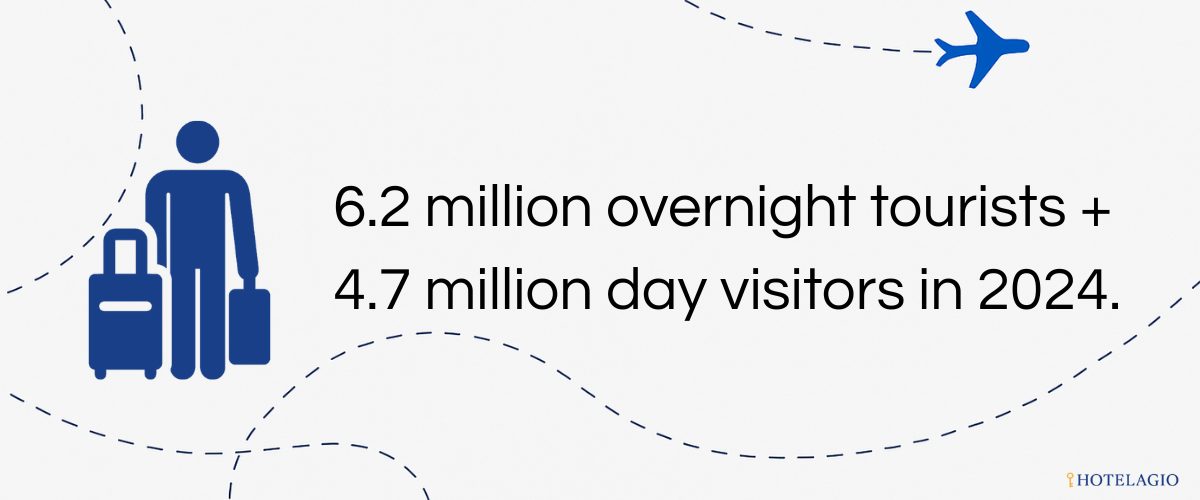
- ~6.2 million staying tourists + ~4.7 million day-trippers in 2024 — showing that a substantial share of visits are short-stay or day trips.
- Visitor arrivals in one quarter (Dec 2024): ~714,000 by air — part of the broader trend of declining inbound flow.
- Domestic tourism spending ~US$21 billion in 2024, vs ~US$4.4 billion from international tourists — domestic market remains the backbone.
- Tourism is estimated to contribute around 8.8% of Argentina’s GDP (in 2023) — underscoring its economic importance, but also its vulnerability.
- Macro matters: the Argentine peso’s real appreciation (~40%+) has made Argentina less competitive price-wise, hurting visitor numbers.
- Regional falloff: visits from neighbours such as Uruguay plunged (~50.9% drop) in late 2024 — border tourism significantly affected.
- Niche growth: the “SAVE tourism” (volunteer, scientific, educational) segment made ~US$39.9 million in 2024 — small overall but growing fast (~11% CAGR forecast to 2030).
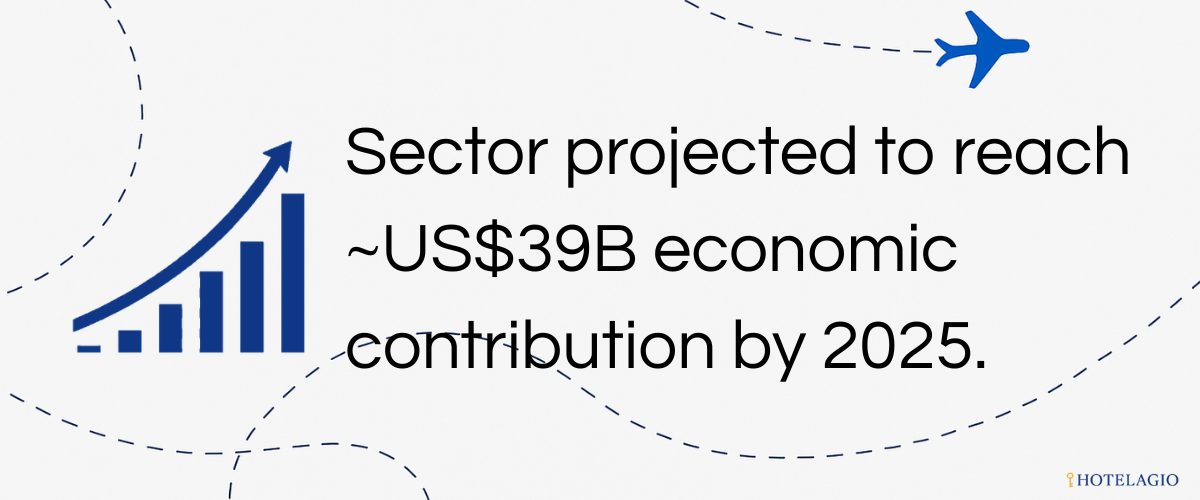
- Economic projection: Argentina’s travel & tourism sector is expected to push toward ~US$39 billion contribution by 2025, if conditions stabilise.
How Many Tourists Visit Argentina Each Year?
Argentina received an estimated 7.4 million international visitors in 2024, surpassing its pre-pandemic baseline and positioning the country among the most visited destinations in the Southern Cone.
Tourism growth in 2024 was driven by stronger regional arrivals, especially from neighboring countries, alongside gradual recovery from long-haul markets.
How Much Do Tourists Spend in Argentina?
International visitors contributed an estimated USD 5.8–6.2 billion to Argentina’s economy in 2024. Currency fluctuations influenced traveler spending patterns, generally making the country a more affordable long-haul destination while supporting higher spending from regional visitors.
Daily visitor expenditure varies significantly by region, but average international spend typically falls between USD 70–110 per day, with higher amounts in Patagonia and major cities such as Buenos Aires.
Which Countries Visit Argentina the Most?
Regional travelers dominate incoming tourism, with the strongest volumes from South America, followed by North America and Europe.
| Country | Visitors (2024 est.) | Notes |
|---|---|---|
| Brazil | ~1.8 million | Largest source market; strong return of leisure travel |
| Chile | ~1.3 million | High frequency cross-border tourism |
| Uruguay | ~850,000 | Seasonal and short-stay patterns |
| Paraguay | ~550,000 | Consistent annual demand |
| United States | ~450,000 | Largest non-regional market |
| Spain | ~350,000 | Strong VFR and extended travel |
| France | ~220,000 | Adventure travel demand |
| United Kingdom | ~170,000 | Recovery improving year to year |
| Germany | ~150,000 | High interest in Patagonia |
| Rest of world | ~1.5 million | Including Canada, Italy, Australia, Asia |
When Is the Best Time to Visit Argentina?
The country’s geography spans diverse climates and seasons, leading to strong variations in monthly demand.
| Month | Visitors (approx.) | Notes |
|---|---|---|
| January | High | Southern summer; peak Patagonia tourism |
| February | High | Carnival and coastal tourism |
| March | Moderate | Wine harvest season in Mendoza |
| April | Moderate | Autumn foliage; city tourism |
| May | Lower | Shoulder season |
| June | Moderate | Ski season begins |
| July | High | Winter holidays; strong regional demand |
| August | Moderate | Continued winter sports |
| September | Moderate | Spring begins |
| October | High | Ideal weather for Patagonia |
| November | High | Pre-summer growth |
| December | High | Holiday travel |
What Are Argentina’s Most Visited Attractions?
Argentina’s attractions reflect its mix of nature, culture, and urban experiences.
| Attraction | Annual Visitors (est.) | Notes |
|---|---|---|
| Iguazú Falls | ~1.3 million | UNESCO site; top natural attraction |
| Buenos Aires (city) | 2–3 million | Cultural and urban tourism hub |
| Perito Moreno Glacier | ~700,000 | Iconic Patagonia destination |
| Mendoza Wine Region | ~1 million | Wine tourism and gastronomy |
| Bariloche & Lake District | ~1.2 million | Year-round outdoor destination |
| Ushuaia & Tierra del Fuego | ~500,000 | Gateway to Antarctica |
| Salta & Jujuy (Northwest) | ~800,000 | Heritage and landscape tourism |
| El Calafate | ~600,000 | Base for glacier tourism |
| Córdoba | ~900,000 | Cultural hub and domestic tourism center |
| Quebrada de Humahuaca | ~400,000 | UNESCO World Heritage |
Hotels Snapshot
The hospitality sector continues to expand, with occupancy and pricing improving across major destinations.
- Total formal accommodation capacity: over 400,000 hotel beds nationwide
- Average national hotel occupancy in 2024: 54–61%, highly seasonal
- Patagonia and Iguazú achieve peak occupancy above 75% during high season
- ADR in Buenos Aires shows steady recovery, with upscale hotels outperforming economy categories
- Growth in boutique hotels and eco-lodges is notable in the Northwest and Patagonia
Key Challenges & Sustainability Considerations
Argentina faces several structural challenges in tourism development:
- Overcapacity during peak seasons in Patagonia and Iguazú
- Infrastructure gaps, particularly in remote areas
- Currency volatility, impacting business planning and visitor behavior
- Environmental concerns, including glacier retreat, protected area stress, and waste management in high-traffic zones
- Connectivity limitations outside major hubs
Efforts to strengthen digital transformation, diversify source markets, and expand sustainable tourism practices are growing, particularly in national parks and rural tourism programs.
FAQ – Argentina Tourism Insights
How many tourists visit Argentina each year?
Around 7.4 million international tourists visited Argentina in 2024, marking a strong recovery.
Which country sends the most tourists to Argentina?
Brazil remains the largest source market, followed by Chile and Uruguay.
What is Argentina’s most visited natural attraction?
Iguazú Falls consistently ranks as the most visited natural site.
When is the best time to visit Argentina?
For Patagonia, October–March is best; for the Northwest, April–October offers ideal conditions; Buenos Aires is a year-round destination.
Is Argentina expensive for tourists?
Costs vary widely by region, but Argentina remains relatively affordable for international visitors due to currency conditions.
What challenges does Argentina’s tourism sector face?
Key issues include infrastructure needs, environmental pressures, and economic volatility.
Sources (HTML)
- Ministry of Tourism and Sports of Argentina — Official tourism reports and annual visitor figures
- National Institute of Statistics and Census (INDEC) — International tourism surveys and spending indicators
- Iguazú National Park Administration — Visitor data for Iguazú Falls
- National Parks Administration of Argentina — Protected area visitation statistics
- Buenos Aires Tourism Board — City tourism performance and hotel occupancy data

0 Comment