

The global wellness app market has expanded rapidly in recent years, driven by rising consumer interest in mental health, fitness, sleep optimization, mindfulness, and chronic condition management.
In 2024, the global wellness app industry was valued at approximately $7.3 billion, and projections suggest it could reach $15–17 billion by 2030, depending on the segment.
Growth is supported by the increase in smartphone penetration, demand for personalized health experiences, AI-driven guidance, and the broader shift toward preventive healthcare.
Key Wellness App Market Stats
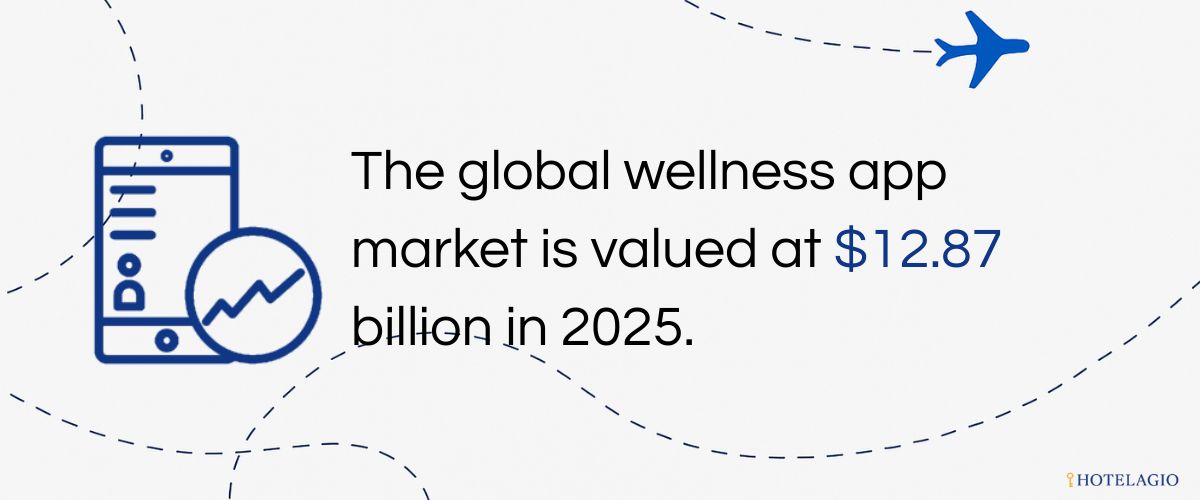
- The global wellness apps market is estimated at USD 12.87 billion in 2025.
- The market is projected to reach about USD 45.65 billion by 2034, implying a sustained long-term expansion.
- From 2025 to 2034 the compound annual growth rate (CAGR) is forecast at roughly 15.1%, highlighting rapid growth in demand.
- As of 2024, apps focused on exercise and weight-loss made up the largest share of the wellness apps market, accounting for about 58.9% of revenue.
- In 2024-25, the smartphone remains the dominant device for wellness apps, with ≈ 67% share, though wearables are identified as a fast-growing segment.
- The iOS platform accounted for the largest share of wellness-app usage in 2024, reaching ≈ 53%, though Android is growing significantly.
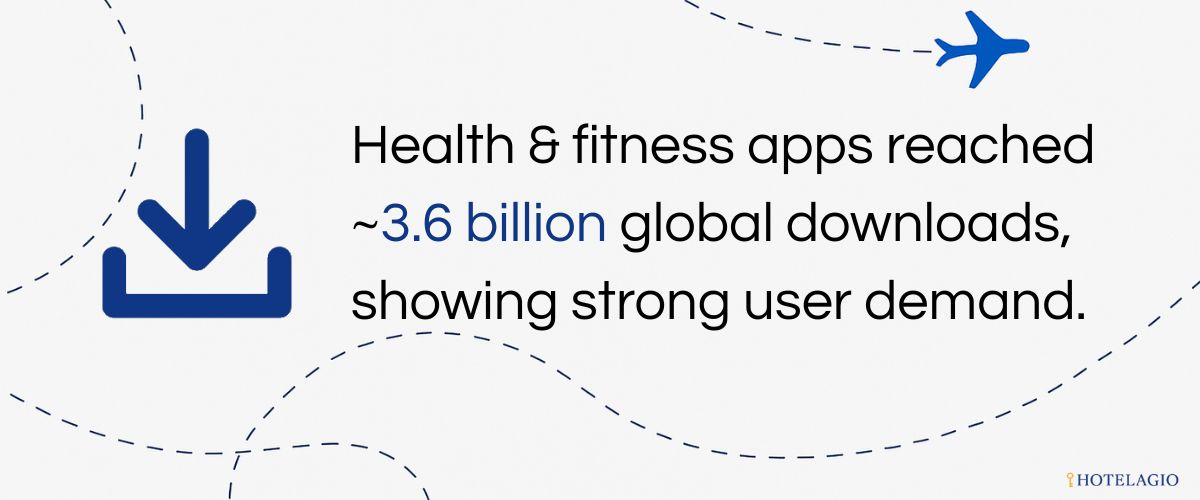
- Global downloads of health & fitness apps recently reached ~3.6 billion across iOS and Google Play, a sign of still strong user engagement in the mobile health/wellness space.
- Subscription-based (i.e. paid or freemium) wellness apps captured a large portion of revenue, in many markets paid/in-app-purchase models contribute the majority of market income.
- The growth of the wellness apps market reflects a broader trend: the global wellness economy, of which apps are only a part, has recently reached ≈ USD 6.3 trillion (2023), signaling robust consumer interest in all things wellness.
How Large Is the Wellness App Market?
The global wellness app market was valued at approximately $7.3 billion in 2024, with expectations to grow to $15–17 billion by 2030, depending on market forecasting models.
Key figures:
- Market size 2022: ~$5.5B
- Market size 2023: ~$6.2B
- Market size 2024: ~$7.3B
- Forecast 2030: ~$15–17B
- CAGR (2024–2030): ~11–14%
Growth is primarily fueled by mental health awareness, digital therapeutics adoption, and consumer preference for mobile-first wellness solutions.
How Fast Is the Wellness App Market Growing?
The wellness app market is expanding at an estimated 11–14% CAGR between 2024 and 2030.
Main growth drivers:
- Increased demand for digital mental health support
- Consumer adoption of fitness-tracking and habit-tracking tools
- Integration of AI personalization into wellness services
- Growth of employer-sponsored wellness programs
- Greater interest in sleep, stress reduction, and mindfulness technologies
What Are the Most Popular Types of Wellness Apps?
Wellness apps can be categorized into mental, physical, and lifestyle-focused solutions. Mental wellness continues to be the fastest-growing segment.
| Category | Market Share (2024 est.) | Notes |
|---|---|---|
| Mental Wellness Apps | 30–34% | Includes meditation, therapy, stress-reduction tools |
| Fitness & Exercise Apps | 27–30% | Workouts, training plans, activity tracking |
| Nutrition & Diet Apps | 15–18% | Meal planning, calorie tracking, performance nutrition |
| Sleep & Recovery Apps | 8–10% | Sleep monitoring, audio guidance, sleep therapy |
| Women’s Health Apps | 5–7% | Cycle tracking, hormonal health |
| Lifestyle & Habit Apps | 8–10% | Habit tracking, productivity, behavioral change |
Mental health and sleep apps are experiencing the fastest year-over-year rise due to increased global awareness of mental wellbeing.
Which Regions Lead the Wellness App Market?
North America and Europe are the most mature markets, while Asia-Pacific is the fastest growing.
| Region | Market Share | Notes |
|---|---|---|
| North America | ~35% | High consumer spending; strong mental health adoption |
| Europe | ~28% | Strict health regulations drive quality standards |
| Asia-Pacific | ~22% | Fastest-growing region (~15–18% CAGR) |
| Latin America | ~8% | Expanding smartphone adoption |
| Middle East & Africa | ~7% | Growth driven by lifestyle and chronic health needs |
Regional maturity varies widely depending on disposable income, cultural attitudes toward wellbeing, and digital infrastructure.
Who Are the Leading Companies in the Wellness App Market?
The market is highly fragmented, with several global leaders and thousands of specialized apps.
| Company / App | Category |
|---|---|
| Calm | Mental wellness and sleep |
| Headspace | Meditation and mental wellness |
| MyFitnessPal | Nutrition tracking |
| Strava | Fitness and athletic performance |
| Fitbit App | Activity tracking and health monitoring |
| Noom | Weight management and behavior change |
| BetterHelp | Online therapy |
| Flo | Women’s health |
| Sleep Cycle | Sleep monitoring |
Subscription models dominate, with monthly or annual plans and optional premium upgrades.
What Trends Are Shaping the Wellness App Industry?
Several macro-trends are influencing the structure and offerings of wellness apps.
Key trends include:
- AI-driven personalization and automated coaching
- Integration with wearables such as Apple Watch, Garmin, Fitbit
- Corporate wellness program expansion
- Rise of digital mental health tools for therapy, CBT, and stress reduction
- Inclusion of biometric data and real-time feedback
- Growing demand for multilingual and culturally-adapted content
- Hybrid coaching models combining human therapists with AI automation
Wellness App Market Performance Snapshot
Instead of hotel metrics, the wellness app industry tracks user adoption, subscription growth, and retention.
Latest indicators (2024–2025):
- Average subscription cost: $12–$20 per month
- User retention after 90 days: 25–34% (varies by category)
- Monthly active users (MAU) growth in mental wellness apps: +18% YoY
- Corporate wellness partnerships increased by ~22% in 2024
- 60% of top apps integrated AI features by early 2025
Retention gains are especially visible in apps with personalized programs and hybrid human-AI guidance.
FAQ – Wellness App Market Insights
How big is the wellness app market in 2025?
The market is valued at roughly $7.3 billion in 2024 and is projected to grow significantly through 2030.
Which wellness apps are most popular?
Mental wellness apps such as Calm and Headspace lead the market, followed by fitness, nutrition, and sleep apps.
What is driving the growth of wellness apps?
Increased focus on mental health, higher smartphone usage, AI personalization, and employer wellness programs are major growth drivers.
Which region is the fastest-growing for wellness apps?
Asia-Pacific is expanding rapidly with a projected 15–18% CAGR.
Are subscription models still dominant?
Yes. Most leading wellness apps rely on monthly or yearly subscription plans with premium content.
Sources
- Grand View Research — Global wellness and health app market size and forecasts
- Statista — Fitness and wellness mobile app statistics
- Market Research Future — Market size projections through 2030
- Forrester Research — Analyst commentary on digital wellness adoption
- NIH / NCBI — Behavioral health trends and digital therapeutic usage

0 Comment