

Workations—extended trips that combine work and leisure, have become one of the fastest-growing segments of global travel.
As remote and hybrid work models expand, millions of professionals are taking advantage of increased flexibility to work from destinations ranging from beach towns to major urban hubs.
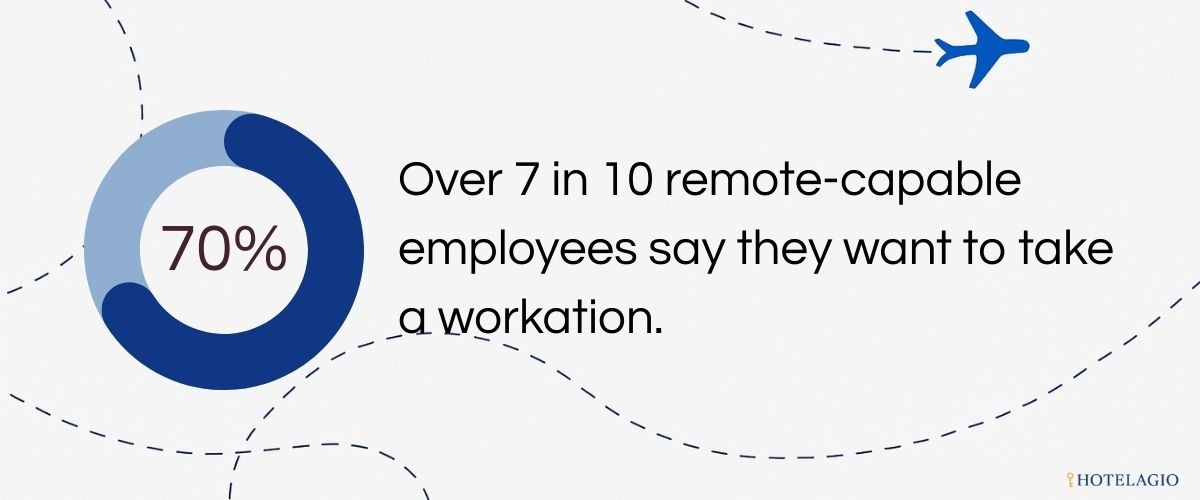
Surveys from 2025 show that over 70 percent of remote-capable employees express interest in taking a workation, while 35 to 40 percent have already taken at least one.
Companies are also adapting: nearly 58 percent of employers now allow employees to work from abroad, at least for limited periods.
Key Workation Stats
- 46% of office workers report they have taken a workation in the past year (either abroad or domestically).
- Searches for “working remotely from another country” in the UK have increased by more than 5000% over the last five years, reflecting a massive growth in interest for remote-work travel lifestyle.
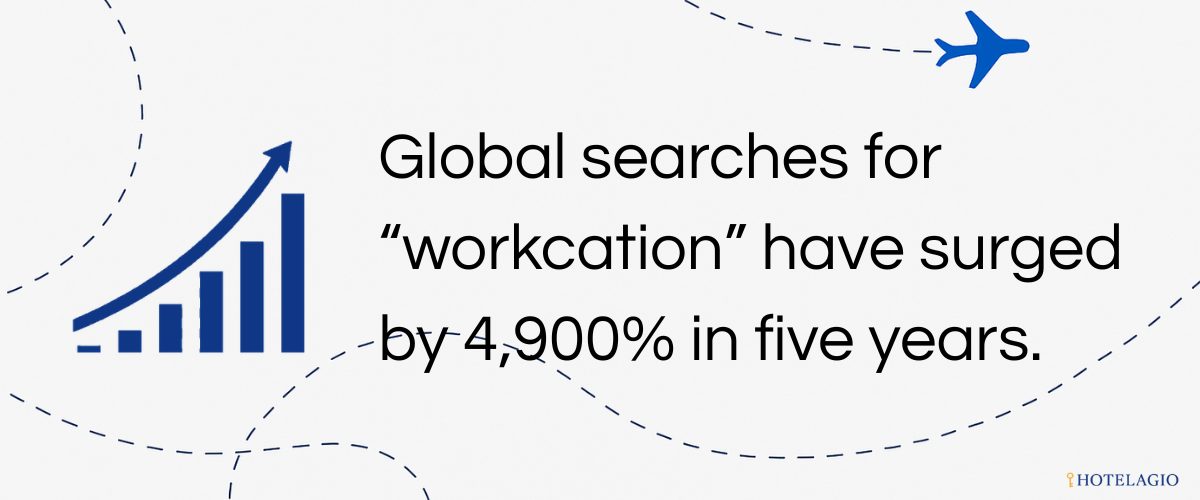
- Globally, searches for “workcation” have surged by about 4900% over a similar period.
- Over 35% of people say they are likely to take a workation in the coming year.
- The global remote-work travel market was valued at approximately US$ 315.7 billion in 2024, a sign that accommodation, transport, coworking and travel-services tailored for remote workers constitute a major economic segment.
- The remote-work travel market is projected to grow at a compound annual growth rate (CAGR) of around 17.2% between 2024 and 2033, indicating strong expansion of workation-related demand.
- Since the pandemic, the shift toward remote or hybrid work has accelerated: as of 2025, a significant share of job postings now allow at least some level of remote work, expanding the pool of people eligible for workations.
- In Europe, recent studies name workation as a growing form of “hybrid tourism,” where travellers combine work-related tasks with leisure or travel, suggesting the concept już wkracza do lista standardowych modeli podróżowania i turystyki.
How Many Professionals Are Taking Workations Each Year?
Workation demand has increased dramatically following the shift toward hybrid and remote work.
In 2024–2025, data shows:
- Approximately 35 to 40 percent of remote workers have taken at least one workation.
- 70 percent say they want to take a workation in the next 12 months.
- About 15 to 20 percent of long-stay international travel bookings are now driven by remote workers.
- The average workation lasts between 2 and 6 weeks, depending on profession and employer policy.
The rise is strongest among tech, creative, consulting, and digital-enabled roles.
How Much Do Workation Travelers Spend?
Workation travelers typically spend more than traditional short-stay tourists because they stay longer and require infrastructure suited for work.
Key spending insights include:
- Workation travelers spend between 30 and 55 percent more per trip than leisure-only travelers.
- Average monthly spending ranges from 2,000 to 4,500 USD, depending on the destination.
- Accommodation accounts for about 45 percent of workation spending.
- Co-working access, reliable connectivity, and larger rentals also increase average spend.
- Urban destinations with strong remote-work ecosystems can achieve significantly higher visitor revenue from workation travelers.
The segment is especially important for destinations wanting to stabilize seasonality and reduce reliance on peak-season tourism.
Which Countries and Regions Are the Biggest Sources of Workation Travelers?
Remote and hybrid workers come from a range of countries, with the highest adoption in regions with strong digital infrastructure.
| Region | Workation Engagement (2024–25) | Notes |
|---|---|---|
| North America | 55–65% | Strong remote work culture |
| Western Europe | 50–60% | High flexibility; frequent long stays |
| Northern Europe | 65–72% | High digital readiness |
| Asia-Pacific | 45–55% | Rapid adoption; rising digital nomadism |
| Latin America | 35–45% | Growing middle class mobility |
| Middle East | 25–35% | Increasing remote-work visas |
Countries with the highest workation outbound demand include the United States, United Kingdom, Germany, Canada, Australia, and the Netherlands.
What Are the Most Popular Workation Destinations?
Popularity is determined by connectivity, safety, cost of living, infrastructure, and visa flexibility.
| Destination | Recognition | Notes |
|---|---|---|
| Portugal | Top global ranking | Digital nomad visa, strong wi-fi |
| Spain | Rising popularity | Coastal cities attract long-stay workers |
| Thailand | High long-stay adoption | Affordable, strong expat networks |
| Mexico | Highly favored by North Americans | Proximity and cost advantages |
| Indonesia (Bali) | Established remote-work hub | Co-working ecosystem |
| Germany | Business-friendly urban hubs | Strong infrastructure |
| Japan | Growing digital visa pathways | Urban appeal |
| Colombia | Emerging remote-work market | Affordable and vibrant |
| Croatia | Digital nomad visa pioneer | Coastal appeal |
| Greece | Low-tax incentives for remote workers | Long-stay visas available |
Destinations offering specialized remote-work visas or tax incentives tend to outperform competitors.
What Workation Behaviors Are Emerging?
Workation travelers differ from traditional leisure tourists in predictable ways:
- They stay significantly longer, often 2–12 weeks.
- They prioritize high-speed internet, work-friendly housing, and proximity to co-working spaces.
- Many practice slow travel on weekends while working during weekdays.
- They are less price-sensitive for longer stays but expect value and consistent digital infrastructure.
- They frequently travel outside peak seasons, reducing seasonality pressure on destinations.
- Wellness, fitness, and nature experiences are highly preferred add-ons.
Workation travelers are shaping a new category between business and leisure travel (bleisure).
Accommodation and Infrastructure Trends
Workation growth has influenced global accommodation models.
Key trends:
- About 35 percent of long-stay booking demand on major rental platforms is now associated with remote work.
- Hotels increasingly offer co-working lounges, private work pods, and guaranteed high-bandwidth internet.
- 60 percent of travelers say they choose rentals with dedicated workspaces.
- Co-living spaces are growing at 15–20 percent per year globally.
- Property owners report higher occupancy rates during off-season months when targeting remote workers.
Destinations that invest in digital infrastructure and co-working facilities attract significantly higher long-stay demand.
Expert Insights
Brian Chesky — CEO, Airbnb
“The pandemic has created a new category of traveler. People are not just traveling during vacations; they’re living in new places for weeks, months, or even entire seasons.”
Sondre Rasch — CEO, SafetyWing
“Remote work is unlocking global mobility on a scale we have never seen before. The workation and digital nomad movements are reshaping cities, economies, and labor models.”
Nathan Blecharczyk — Co-founder, Airbnb
“Long-term stays are the fastest-growing segment of travel. The future of travel will be defined by flexibility and the ability to work from anywhere.”
Gillian Tans — Former Booking.com CEO
“Destinations that adapt their infrastructure to support remote workers will benefit from more stable year-round tourism.”
FAQ – Workation Insights
What percentage of workers are taking workations?
Approximately 35–40 percent of remote workers have taken at least one workation, and interest continues to rise.
Are employees willing to pay more for work-friendly accommodations?
Yes. Remote workers are willing to spend 30–55 percent more per trip for reliable connectivity and long-stay comfort.
Which destinations are best for workations?
Countries like Portugal, Spain, Thailand, Indonesia, Mexico, and Croatia consistently rank highest for infrastructure, affordability, and visa options.
How long does a typical workation last?
Average stays range from 2 to 6 weeks, though some remote workers extend to several months.
What challenges do workation travelers face?
Digital connectivity issues, visa restrictions, time-zone alignment, and balancing productivity with leisure remain the main obstacles.
Sources
- Airbnb Reports — Data on long-term stays, remote work trends, and destination popularity
- Booking.com Travel Predictions — Surveys on traveler preferences, remote work, and long-stay behaviors
- McKinsey & Company — Research on remote work adoption and its impact on travel
- OECD Remote Work Analysis — Insights on digital nomadism and international labor mobility
- SafetyWing Remote Work Reports — Data on global nomad behavior and remote worker demographics

0 Comment